*HIFU vs XERF vs Morpheus8: Technology, Treatment Depth, Results & Differences
1. Introduction: Understanding Three Different Skin Tightening Technologies
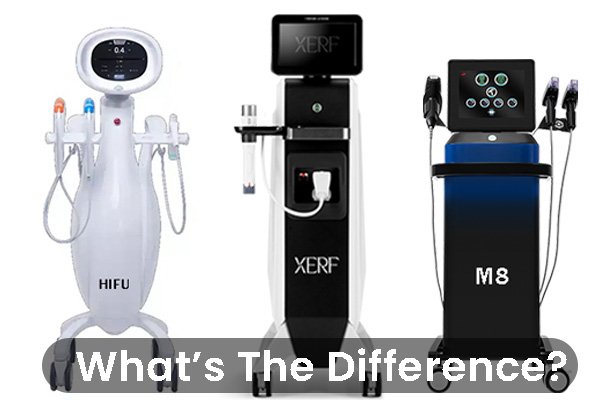
HIFU vs XERF vs Morpheus8 is not a comparison between three versions of the same device. HIFU uses focused ultrasound, XERF uses dual-frequency monopolar radiofrequency (RF), and Morpheus8 uses RF delivered through microneedles. Each works through a different energy source, reaches tissue in a different way, and suits different treatment goals.
Why HIFU, XERF, and Morpheus8 Are Often Compared
All three appear in conversations about non-surgical skin tightening, collagen stimulation, and skin rejuvenation. Patients searching for “skin tightening” often see all three names on the same results page, so clinics are regularly asked which one is “better.” The question is understandable, but it hides an important point: the three names belong to different categories.
Are Ultrasound, Monopolar RF, and RF Microneedling the Same?
No. They differ in three basic ways:
- Energy source: HIFU delivers acoustic (sound) energy. XERF and Morpheus8 deliver electrical radiofrequency energy.
- Delivery route: HIFU and XERF act through the skin surface without puncturing it. Morpheus8 inserts fine needle electrodes into the skin.
- Heating pattern: HIFU concentrates heat at small focal points. Monopolar RF heats tissue through its electrical resistance. RF microneedling creates fractional thermal zones around the needle electrodes.
Treating them as interchangeable leads to poor purchasing decisions and unrealistic patient expectations.
2. What Is HIFU? Understanding Focused Ultrasound Technology
High-intensity focused ultrasound (HIFU) is a non-invasive technology that uses focused acoustic energy to create controlled heating beneath the skin surface. A 2025 systematic review in Aesthetic Surgery Journal, covering 45 studies, found that HIFU has become a widely used option for skin tightening, facial rejuvenation, and body contouring, with generally limited downtime.
How High-Intensity Focused Ultrasound Works
HIFU handpieces emit ultrasound waves that are focused, much like a magnifying glass concentrates sunlight. Aesthetic HIFU devices typically operate in the low-megahertz range. The waves pass through the epidermis with little heating, then converge at a defined point beneath the surface where the energy density is high enough to raise tissue temperature quickly.
A conductive gel is applied to ensure efficient acoustic coupling between the transducer and the skin.
How HIFU Delivers Energy to Different Tissue Depths
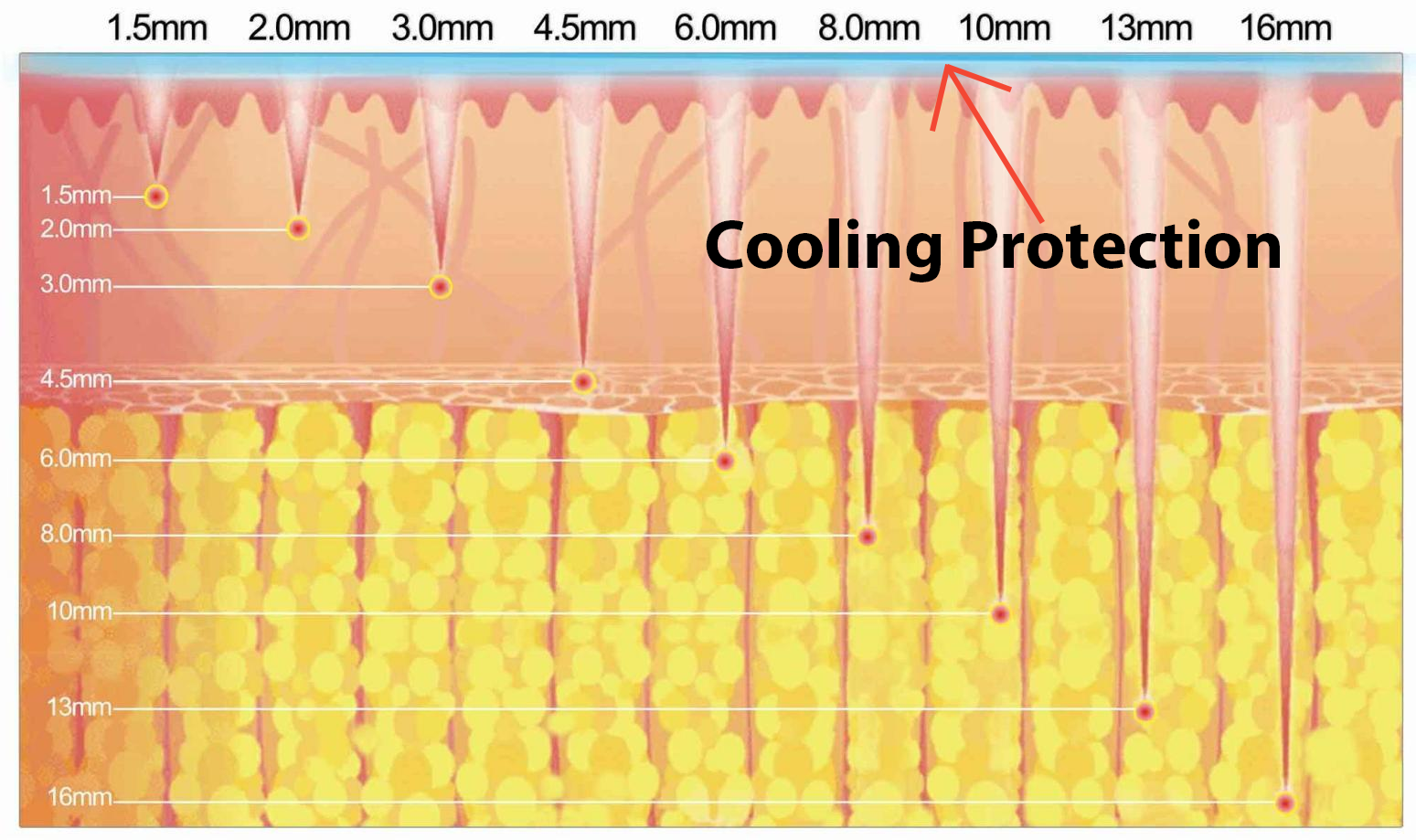
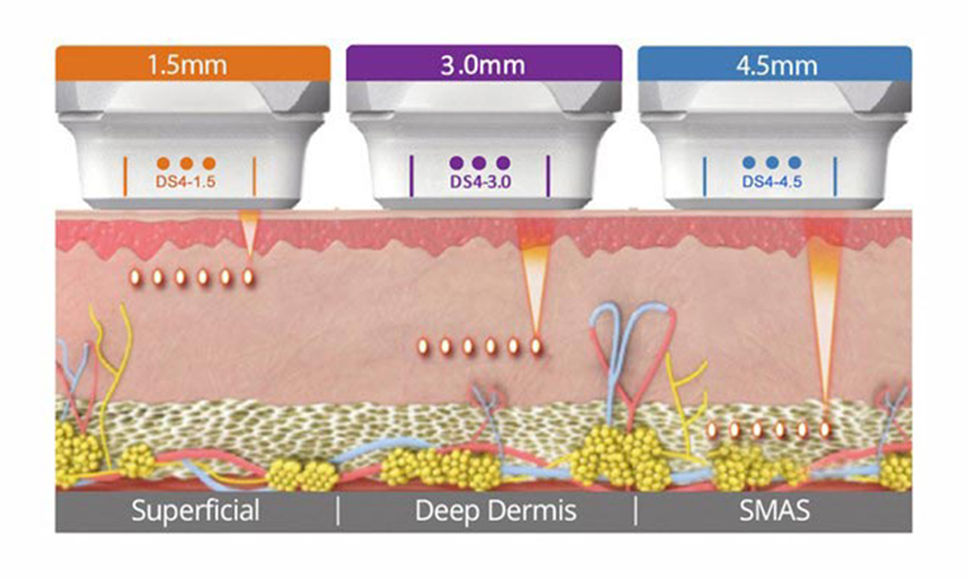
Different transducer cartridges are designed to place the focal point at different depths. This lets practitioners direct energy toward the superficial dermis, deeper dermal layers, or the deeper fibromuscular layers that support the face, depending on the area being treated and the device design. The same principle underlies microfocused ultrasound with visualization (MFU-V) systems, where imaging helps the operator see tissue layers during treatment.
Understanding Treatment Depth: 1.5mm, 3.0mm, and 4.5mm
Many professional HIFU systems offer cartridges labeled 1.5 mm, 3.0 mm, and 4.5 mm. These figures describe the nominal focal depth below the skin surface that the transducer is designed to target:
- 1.5 mm is generally associated with the upper-to-mid dermis, often selected for finer areas and for skin texture goals.
- 3.0 mm is generally associated with the deeper dermis and the region near the subdermal layer.
- 4.5 mm is generally associated with deeper structures, including the fibromuscular layer relevant to facial lifting.
Thermal Coagulation Points and Collagen Remodeling
At each focal point, tissue temperature rises enough to produce a small, discrete thermal coagulation zone. Surrounding tissue is largely spared. The body then responds to this controlled thermal injury with a wound-healing process, including collagen contraction and new collagen formation over the following weeks. This is why visible tightening is typically described as gradual rather than immediate.
Common Aesthetic Applications of HIFU
- Lifting and tightening of the lower face, jawline, and cheeks
- Neck and submental laxity
- Brow and periorbital area, using shallower cartridges
- Body contouring applications on areas such as the abdomen and thighs, using appropriate device configurations


Advantages and Limitations of HIFU Technology
Advantages
- Non-invasive, with no needles or incisions
- Energy can be targeted at defined depths
- Established use for facial lifting and tightening
- Limited downtime in most cases
Limitations
- Results develop gradually and vary between patients
- Not designed primarily for surface resurfacing
3. What Is XERF? Understanding Dual-Frequency Monopolar RF Technology
XERF is a non-invasive monopolar radiofrequency system. It belongs to the broader family of monopolar RF devices, but its dual-frequency design is specific to this machine. Descriptions below that refer to dual-frequency operation apply to XERF, not to monopolar RF devices in general.
How Monopolar Radiofrequency Works
In monopolar RF, current flows from a single active electrode in the handpiece through the body to a return electrode (a grounding pad or equivalent). As the current passes through tissue, the tissue’s natural electrical resistance converts electrical energy into heat. This resistive heating can reach deeper layers than many bipolar or surface-based approaches, because the current path extends through the tissue between the electrodes.
Published literature describes the resulting thermal effect as acting on the dermis and on the fibrous septa that anchor skin to deeper structures. Heat causes immediate collagen contraction, and the longer-term response involves wound healing and tissue remodeling.
Understanding XERF’s Dual-Frequency Technology
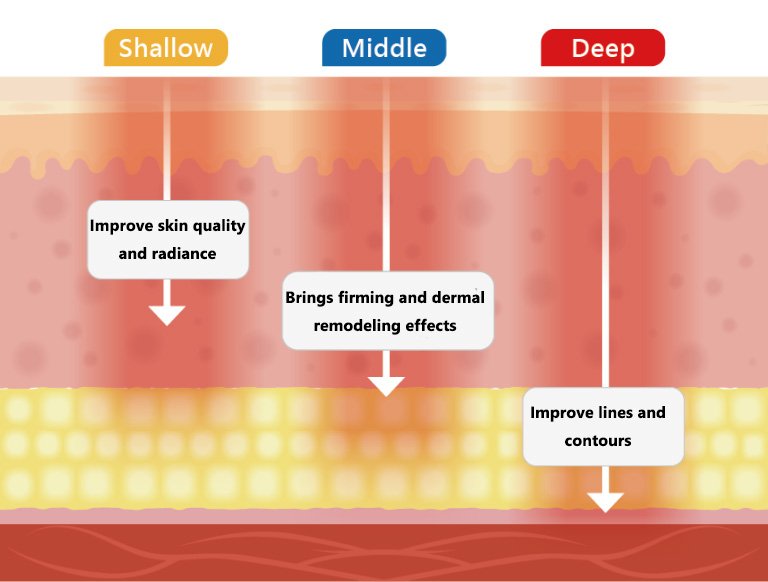
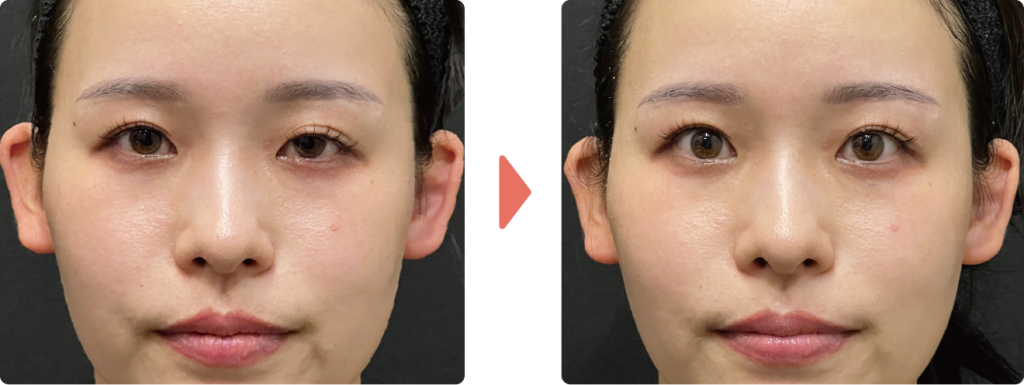
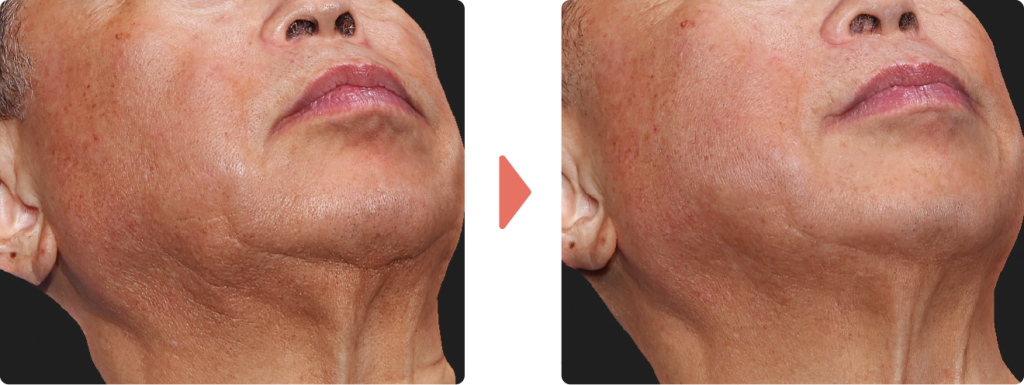
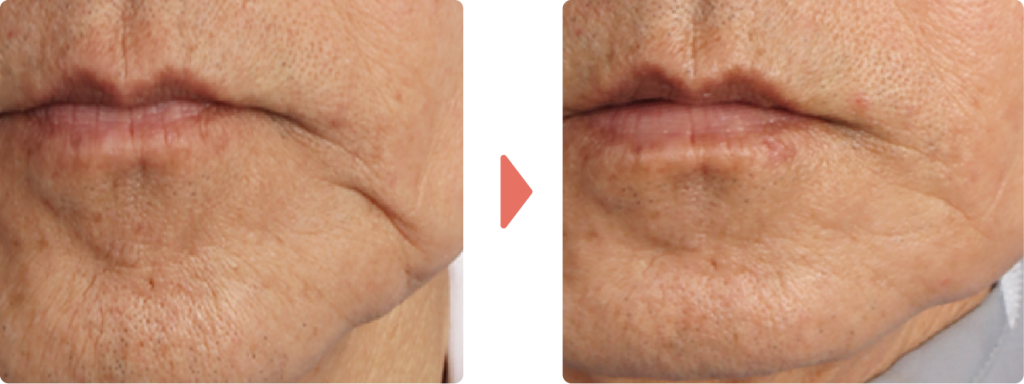
According to a 2026 retrospective study, XERF delivers two frequencies in sequence within a single pulse: 6.78 MHz followed by 2 MHz. The manufacturer describes this as the first multifrequency monopolar RF treatment and states that the combination is intended to shape how energy is distributed across tissue depths. The manufacturer also describes three depth settings and ten intensity levels.
A porcine histology study by Lutronic researchers examined the 6.78 + 2 MHz combination and reported collagen bundle changes in the dermis and fascia after treatment. This is early experimental evidence from the manufacturer’s own team.
How Radiofrequency Energy Interacts with Skin Tissue
When RF energy meets tissue, several factors determine where heat accumulates:
- Tissue impedance: Different tissues resist current differently, which shapes where heating occurs.
- Frequency: Different frequencies interact with tissue differently, which is the rationale behind dual-frequency approaches.
- Contact and technique: Consistent applicator contact and passes affect how evenly energy is delivered.
Because results depend on tissue properties, outcomes can vary between individuals.
The Role of Impedance Control and Integrated Cooling
Monopolar RF requires careful thermal management because the goal is to heat deeper tissue while protecting the epidermis. Systems typically combine impedance or temperature feedback with surface cooling. In the 2026 study, XERF was used with its integrated cooling device (ICD) at the lowest of its three settings, and energy was adjusted to patient tolerance.
Common Aesthetic Applications of XERF
- Facial skin laxity and general skin quality improvement
- Lower face, jawline, and submental tightening
- Neck laxity
- Fine lines and wrinkles, according to ongoing clinical research
The retrospective study reported improvements in facial laxity and skin quality at one and three months after a single session, with a favorable tolerability profile.
Clinics researching monopolar RF as a service category can read more in our guide to Monopolar RF Technology.
Advantages and Limitations of XERF Technology
Advantages
- Non-invasive, with no needles
- Dual-frequency design intended to reach a range of depths
- Integrated cooling for surface protection
- Generally limited downtime
Limitations
- Not a substitute for resurfacing or microneedle-based remodeling
- Contraindications such as implanted electronic devices must be screened
- Results depend on energy settings, patient tolerance, and technique
4. What Is Morpheus8? Understanding Fractional RF Microneedling
Morpheus8 is a fractional radiofrequency microneedling platform. It combines mechanical microneedling with RF energy released inside the tissue. Unlike HIFU and XERF, it is minimally invasive, because needle electrodes enter the skin.
How RF Microneedling Works
In RF microneedling, an array of fine needles is pressed into the skin, and RF energy is delivered through them. Morpheus8 uses bipolar RF through insulated microneedles, which means the current travels between electrodes within the treated area rather than passing through the whole body. The needles create small mechanical channels, and the RF energy creates heat at selected depths below the surface.

How Microneedles Deliver Radiofrequency Energy into the Skin
The Morpheus8 applicators deliver RF energy to the skin in a fractional manner through an array of multi-electrode pins. The disposable tip heads come in several pin configurations, such as 12-pin, 24-pin, and 40-pin designs. The system monitors RF parameters during delivery as a safety feature.
Because energy is released from the needle electrodes inside the tissue, the heat is not applied only to the surface. This is the key mechanical difference from non-invasive devices.

Fractional Thermal Zones and Collagen Remodeling
“Fractional” means that energy is delivered to discrete zones, leaving tissue between them untreated. The untreated tissue supports faster recovery than a uniform treatment of the whole area would allow. The thermal injury within each zone triggers a wound-healing response that is theorized to stimulate neocollagenesis and elastogenesis, and contraction of connective tissue.
Treatment Depth and Adjustable Needle Configuration
Needle depth is adjustable, and different tips and versions have different capabilities.
It is also important to separate needle depth from thermal effect. The depth the needle reaches is a mechanical measurement. The region actually affected by heat depends on RF energy, pulse settings, and tissue properties, and it extends around the electrodes rather than stopping exactly at the needle tip.
Common Aesthetic Applications of Morpheus8
- Skin texture and tone irregularities
- Fine lines and wrinkles
- Mild to moderate skin laxity on the face and neck
- Acne scarring and surface irregularities, depending on tip and protocol
- Body treatments in some configurations
Clinics researching this category can read more in our guide to RF Microneedling Technology.
Advantages and Limitations of RF Microneedling
Advantages
- Treats the dermis directly through needle-delivered energy
- Adjustable depth and tip options for different areas and goals
- Addresses texture and laxity concerns in one treatment
- Fractional pattern supports healing compared with full-surface treatment
Limitations
- Minimally invasive, with needle-related effects such as redness and swelling
- Recovery varies with depth, energy, and individual response, and cannot be promised to be negligible
- Often needs topical anesthesia or other comfort measures
5. HIFU vs XERF vs Morpheus8: Key Technology Differences
The three technologies differ most in energy source, how energy enters the skin, and how heat is distributed in tissue. The table below summarizes these differences, and the sections after it explain each row.
| Comparison | HIFU | XERF | Morpheus8 |
|---|---|---|---|
| Energy source | Ultrasound | Radiofrequency | Radiofrequency |
| Technology | Focused ultrasound | Dual-frequency monopolar RF | Fractional RF microneedling |
| Energy delivery | Focused acoustic energy | RF current through a skin-contact applicator | RF delivered through microneedle electrodes |
| Skin penetration | Non-invasive | Non-invasive | Minimally invasive |
| Tissue interaction | Localized thermal effects at focal zones | Resistive tissue heating | Fractional thermal zones around needle electrodes |
| Main focus | Lifting and tightening | Skin tightening and remodeling | Skin remodeling and texture improvement |
| Needles required | No | No | Yes |
| Downtime | Generally limited | Generally limited | May involve post-treatment recovery |
Energy Source: Ultrasound vs Radiofrequency
HIFU uses mechanical sound waves. XERF and Morpheus8 use electromagnetic RF energy that is converted to heat by tissue resistance. This is the most fundamental distinction. It affects how energy is focused, how it interacts with different tissue types, and which safety controls are needed.
Treatment Method: Non-Invasive vs Microneedle-Based
HIFU and XERF act from the skin surface and do not puncture the skin. Morpheus8 delivers energy through needles that enter the skin. This difference shapes comfort measures, hygiene requirements (single-use sterile tips), and the type of recovery to expect.
Target Tissue and Treatment Depth
Treatment depth cannot be ranked on a single scale across these technologies, because each one measures something different:
- HIFU: the nominal focal depth of the transducer, with energy concentrated at a point.
- XERF: the range over which RF current heats tissue, influenced by frequency, impedance, and settings.
- Morpheus8: the depth to which the needle electrodes are inserted, with heat spreading around them.
A focal depth, an electrical heating range, and a needle insertion depth are different concepts. Comparing them as if they were numbers on one ruler is misleading. The sensible approach is to ask, for each device, what tissue layers it is designed to treat and what evidence supports that design.
How Each Technology Produces Thermal Effects
- HIFU creates small, discrete coagulation points at the focus.
- XERF heats tissue broadly through resistive heating along the current path.
- Morpheus8 creates fractional thermal zones around the needle electrodes inside the dermis and deeper tissue.
All three trigger a thermal wound-healing response that leads to collagen remodeling over time, but the spatial pattern of that heat differs.
Skin Tightening vs Skin Resurfacing
HIFU and XERF are generally positioned around tightening and lifting, working on deeper structures without disturbing the surface. Morpheus8 is generally positioned around skin remodeling and texture, because it treats the dermis directly and creates mechanical channels. These are tendencies, not rigid rules, since protocol and settings can shift the emphasis of any device.
Treatment Experience and Downtime
HIFU and XERF are generally associated with limited downtime. Common short-term effects of HIFU include transient redness, swelling, or mild discomfort. Morpheus8 can involve a recovery period that varies with depth, energy, and individual response. Actual experience depends on the device, settings, treatment area, and patient, so clinics should avoid promising a fixed recovery time or “no downtime”.
6. HIFU vs XERF vs Morpheus8: Which Technology Is Suitable for Different Needs?
No single technology is best for every patient or every clinic. The better question is which technology fits a given goal, patient profile, and service model.
For Non-Invasive Skin Tightening
HIFU and XERF both fit patients who want tightening without needles. HIFU concentrates energy at defined focal depths and is well established for lifting. XERF applies RF heating across tissue, and its dual-frequency design is intended to reach different depths. Clinical evidence for HIFU is broader at this point, with multiple systematic reviews, while XERF’s published evidence is newer and still growing. Clinics should weigh the maturity of evidence along with the mechanism.
For Facial Contouring and Lifting
HIFU is most often chosen for jawline definition, cheek and brow lifting, and neck laxity, because its focal depth options are designed to reach the deeper supporting layers of the face. XERF is also positioned for lower-face and neck tightening. Morpheus8 can improve mild to moderate laxity as part of a remodeling approach, but it is usually selected for reasons beyond lifting alone.

For Skin Texture and Remodeling
Morpheus8 is the technology of the three most closely tied to skin texture, fine lines, and surface irregularities, since it treats the dermis directly and produces mechanical and thermal change at the same time. Patients with texture concerns who are unwilling to accept recovery time may be better served by a non-invasive approach, which should be discussed honestly during consultation.
For Clinics Building a Multi-Technology Treatment Portfolio
A clinic’s mix of technologies should reflect its patient base:
- A clinic with many patients seeking facial lifting and tightening without recovery benefits from a HIFU platform.
- A clinic offering RF-based skin quality and laxity treatments can add monopolar RF.
- A clinic with experience in procedures involving needles, topical anesthesia, and post-treatment care can consider RF microneedling.
Offering more than one technology allows the clinic to match the treatment to each patient instead of fitting every patient to one device.
Can These Technologies Complement Each Other?
In principle, yes. Because they work through different mechanisms and at different tissue levels, practitioners sometimes combine ultrasound-based and RF-based treatments in a planned sequence, or recommend them at different points in a patient’s long-term plan. The evidence for specific combination protocols is limited and varies, and decisions about sequencing, spacing, and safety belong to the treating clinician. This article does not recommend any specific combined protocol.
7. How to Choose the Right Skin Tightening Technology for Your Clinic
Choosing equipment should start with the clinic’s patients and services, then move to technical detail. Power rating and price alone are poor guides.
Understand Your Target Patients and Treatment Services
List the concerns your patients bring most often: lifting, laxity, texture, scarring, or body contouring. Then consider their tolerance for recovery time and their expectations about how quickly results appear. A technology that fits a patient group poorly will produce disappointment, however advanced it is.
Evaluate Energy Delivery and Treatment Depth
Ask each manufacturer how energy is delivered, what depth or range is intended for each handpiece or tip, and what evidence supports it. Remember that focal depth, RF heating range, and needle depth are different measurements and should not be compared directly. For HIFU, ask how cartridge depth is defined and verified.
Compare Device Parameters and Applicator Designs
Review parameters that affect treatment quality and flexibility:
- Cartridge or applicator options and their intended areas
- Number of shots or treatment lines available per cartridge, where applicable
- Adjustable energy levels and treatment modes
- Cooling, contact feedback, and temperature or impedance monitoring where relevant
- Handpiece ergonomics and treatment speed
Consider Safety Features and Operator Training
Safety depends on both the device and the operator. Look for built-in protective features, clear contraindication guidance, and documented operating procedures. Ask what training the supplier provides, since anatomical knowledge and technique strongly influence outcomes with ultrasound and RF devices alike.
Evaluate Maintenance, Consumables, and After-Sales Support
Total cost of ownership includes more than the purchase price:
- Cost and availability of cartridges, tips, or other consumables
- Warranty terms and service response time
- Availability of spare parts and handpiece replacement
- Software updates and technical support in your language and time zone
Consider Manufacturer Experience and Customization Capabilities
An experienced manufacturer can provide documentation, training material, and technical consultation, and may offer customization such as interface language, branding, or configuration to fit a clinic’s or distributor’s market. Ask for references, quality management certifications, and sample documentation before committing. A reliable supplier will be open about what a device can and cannot do.
8. Exploring Professional HIFU Machine Solutions
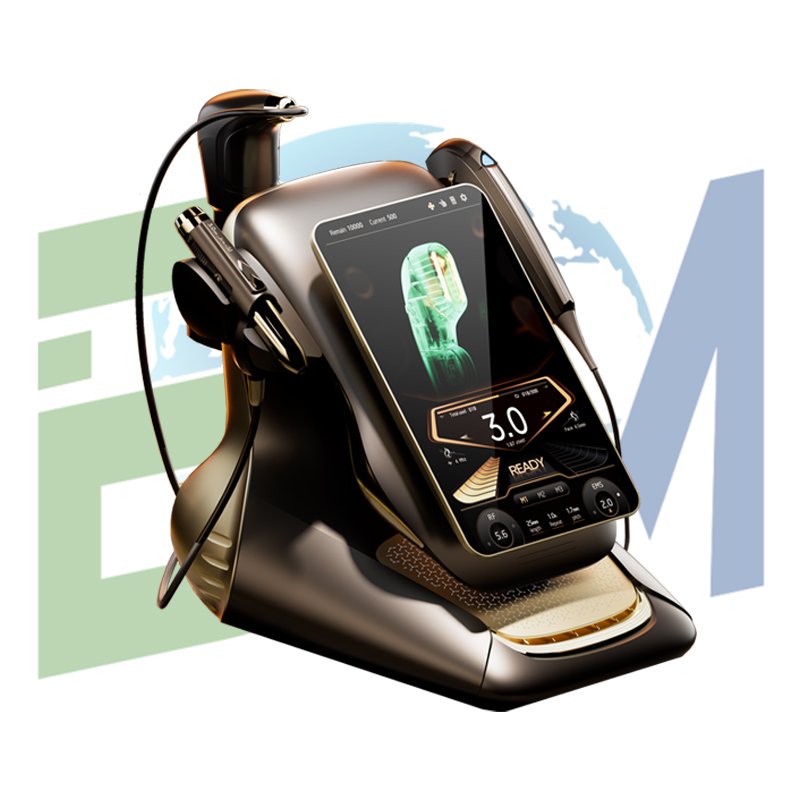
For clinics that decide HIFU fits their patient base, the next step is understanding what a professional HIFU system should offer and how to evaluate suppliers.
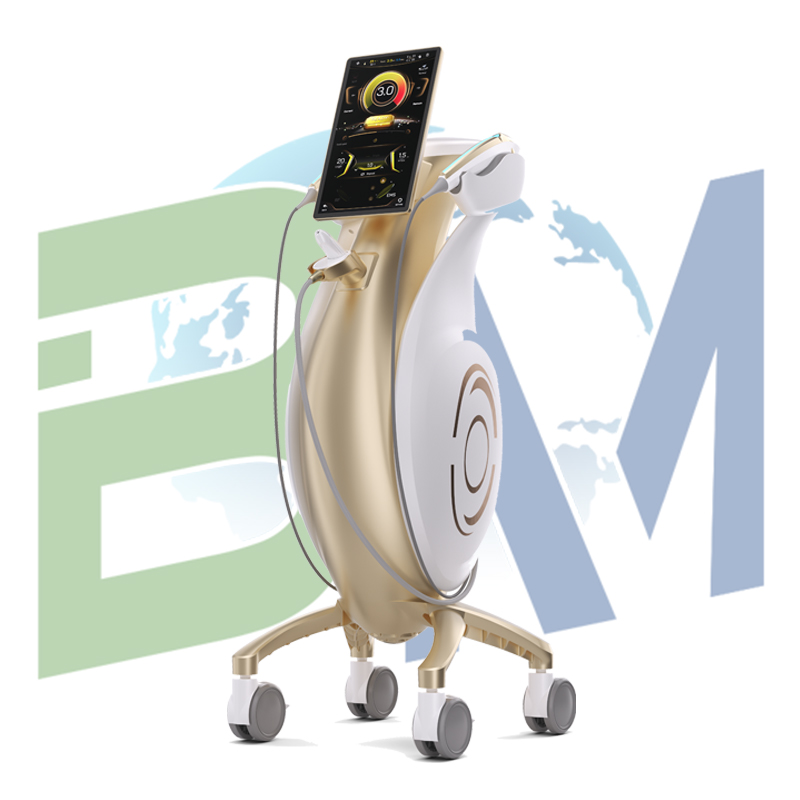
Different HIFU Configurations for Aesthetic Clinics
Professional HIFU machines are offered in several configurations to suit different services:
- Face and neck systems with shallow-to-deep cartridges for lifting and tightening
- Face and body systems with additional cartridges for body contouring applications
- Compact or portable units for smaller treatment rooms or multi-site practices
Explore our range of HIFU Skin Tightening Devices to compare available configurations.


What to Evaluate Before Purchasing a HIFU Machine
- Available cartridge depths and how focal depth is specified and tested
- Frequency, energy output, and shot count per cartridge
- Treatment line length and control over spacing and energy
- Cooling, coupling, and safety control features
- Regulatory documentation for your target market
- Cartridge replacement process and consumable pricing
- Operator manual, training resources, and clinical protocol guidance
Working with an Experienced HIFU Equipment Manufacturer
An experienced HIFU Machine Manufacturer can explain how its transducers are designed and tested, supply documentation, and support clinics and distributors after the sale. For distributors and clinic groups, manufacturing capacity, quality control, and customization options also matter, including interface language, branding, and configuration for specific markets.
Request Product Specifications and Technical Consultation
If you are comparing HIFU systems, request the full technical specifications, cartridge options, and documentation for the model you are considering, and discuss your clinic’s patient profile with a technical specialist before deciding. A good consultation should help you determine whether HIFU is the right fit, not only which model to buy.
Explore Our HIFU Machines or contact our team to request specifications and a quotation.
9. Frequently Asked Questions
Is HIFU better than XERF?
Neither is better in every situation. HIFU uses focused ultrasound for lifting and tightening at defined depths, while XERF uses dual-frequency monopolar RF to heat tissue. The better choice depends on the treatment goal, patient profile, available evidence, and the device being compared.
What is the main difference between HIFU and Morpheus8?
HIFU is a non-invasive ultrasound technology that creates focal thermal points beneath the skin. Morpheus8 is a minimally invasive RF microneedling platform that delivers RF energy through needle electrodes. HIFU is mainly used for lifting and tightening, while Morpheus8 is mainly associated with skin remodeling and texture.
Is XERF the same as monopolar RF?
XERF is a monopolar RF system, but not all monopolar RF devices share its features. XERF’s dual-frequency operation (6.78 MHz followed by 2 MHz) is specific to this machine and should not be attributed to other monopolar RF systems.
Does Morpheus8 use ultrasound or radiofrequency?
Morpheus8 uses radiofrequency energy, not ultrasound. The energy is delivered through microneedle electrodes that enter the skin.
Which technology works at deeper tissue levels?
This cannot be answered with a single ranking, because the technologies measure depth differently. HIFU uses a nominal focal depth, XERF’s effect depends on how RF current heats tissue, and Morpheus8 depends on needle insertion depth, which varies by tip and version. Ask each manufacturer how its device defines and verifies depth.
Which treatment involves microneedles?
Morpheus8 involves microneedles. HIFU and XERF do not use needles.
Can HIFU and RF treatments be combined?
They can be used in the same treatment plan because they work through different mechanisms, but the evidence for specific protocols is limited. Sequencing, spacing, and suitability should be decided by the treating clinician for each patient.
How should clinics choose between HIFU, XERF, and Morpheus8?
Start with the clinic’s patients and services, then compare energy delivery, depth design, safety features, regulatory documentation, training, consumable costs, and after-sales support. Many clinics find that more than one technology serves their patients better than any single device.