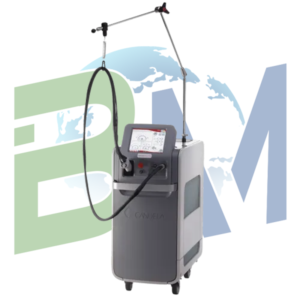
Sports medicine clinics use focused shockwave therapy mainly as an adjunct within a rehabilitation program for persistent tendon, fascia, and selected bone conditions, not as a stand-alone cure. A 2025 international Delphi consensus in the British Journal of Sports Medicine, with 41 experts from 13 countries, supported shockwave or pressure wave therapy for several tendinopathies, plantar fasciopathy and certain bone conditions, and agreed that tendon and joint problems can be co-treated with exercise-based physical therapy.
A 2024 meta-analysis favored shockwave over corticosteroid injection for plantar fasciitis.
This article explains where clinics apply focused shockwave, how it fits into a rehabilitation workflow, what a session involves, and what to check when choosing a machine.
1. What Is Focused Shockwave Therapy in Sports Medicine?
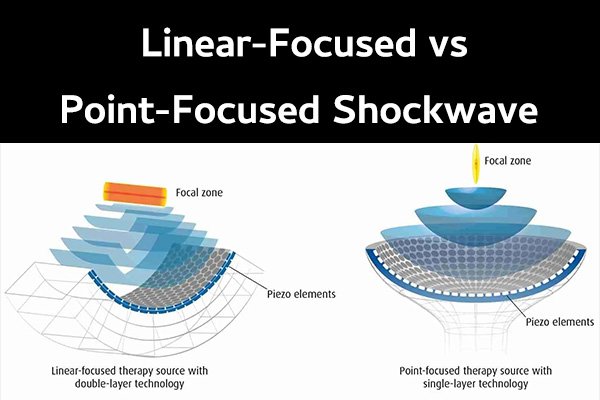
Focused shockwave therapy delivers acoustic pulses that converge on a defined target depth in the tissue, so a clinician can treat a tendon insertion, a fascia origin or a bone site with controlled energy. For the underlying wave physics, see our guide to focused shockwave therapy technology.
How Focused Shockwave Therapy Works
A focused applicator concentrates energy into a focal zone at a depth set by the applicator and its standoff. The proposed biological effects include mechanotransduction, stimulation of tissue-repair signaling and modulation of pain pathways.
Focused Shockwave Therapy vs. Radial Pressure Wave Therapy
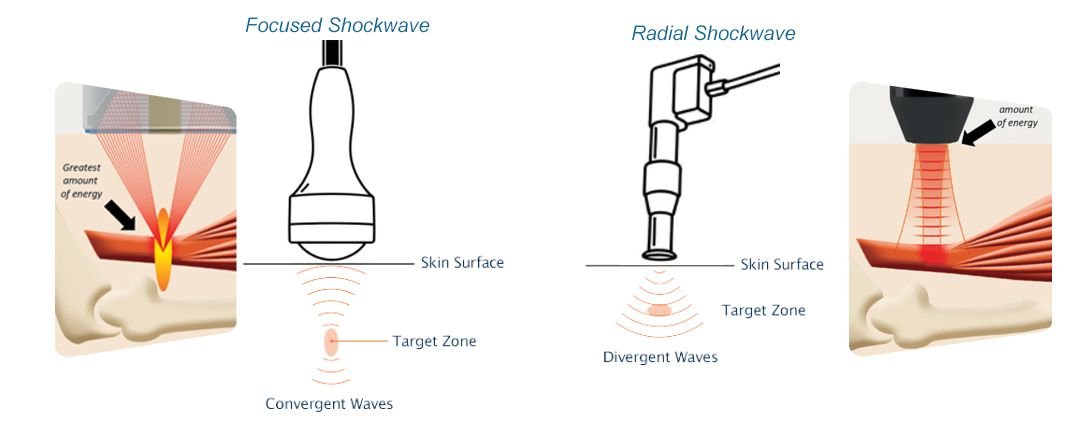
Radial devices generate a pressure wave in the handpiece that spreads outward from the applicator tip, with the highest pressure at the surface. Focused devices converge energy at depth. The 2025 consensus suggests reserving the term “ESWT” for focused shockwaves and reporting which type was used.
Why Sports Medicine Clinics Use Focused Shockwave Technology
- Depth targeting: a defined focal depth reaches deeper structures such as insertional tendon sites. Our BA-SW30 states a focal depth of 1.0 to 6.6 cm and our BA-SW25 a penetration of 4 to 66 mm.
- Defined dosing: energy flux density (EFD) can be set and reported, which supports consistent protocols.
- Short, outpatient sessions: the consensus recommends treating without local anesthetic, and our BA-SW25 page describes sessions of about 10 to 15 minutes.
- Training continuity: the consensus reported no need for range-of-motion or weight-bearing restrictions in tendinopathies and fasciopathies, including for athletes in season.
2. Common Sports Injuries Treated with Focused Shockwave Therapy
The 2025 consensus lists plantar fasciopathy, midportion and insertional Achilles tendinopathy, and rotator cuff, common extensor, hamstring, patellar, gluteal and greater trochanteric tendinopathies among the conditions where shockwave or pressure wave therapy is recommended, along with low-grade partial tears.
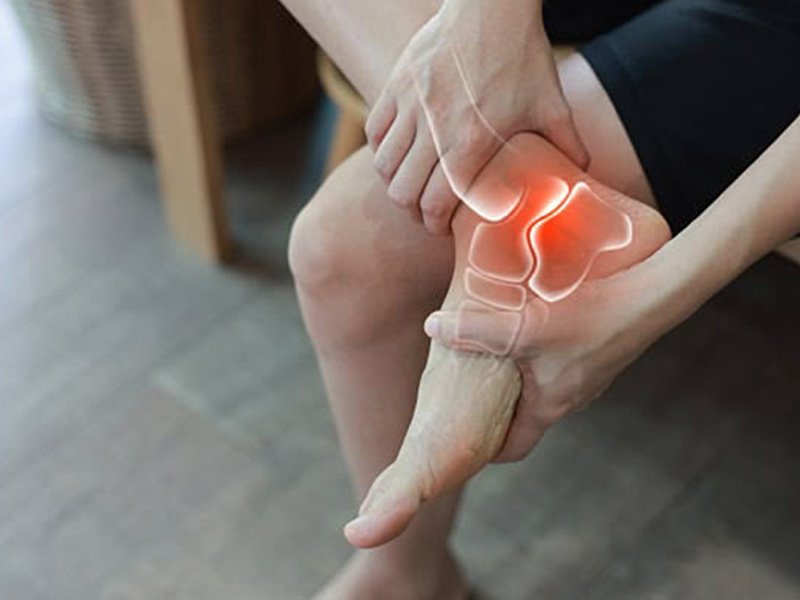
Plantar Fasciopathy and Persistent Heel Pain
This is the strongest-supported use. A 2024 meta-analysis of 16 randomized trials (1,121 patients) found shockwave reduced pain more than corticosteroid injection at 3 months (SMD −0.6) and 6 months (SMD −0.81) and improved foot function at both points.
Achilles Tendinopathy
The consensus includes both midportion and insertional Achilles tendinopathy. Progressive loading remains the foundation of management, and shockwave is positioned as an add-on.
Tennis Elbow and Other Tendinopathies
Pain effects were larger in radial studies (mean difference −1.13 on a 10-point scale) than focused ones (−0.67, not statistically significant), larger with symptoms over 6 months, and not sustained beyond 24 weeks. This is a good example of why the focused-versus-radial question cannot be answered by assumption.
Hamstring and Gluteal Tendinopathies
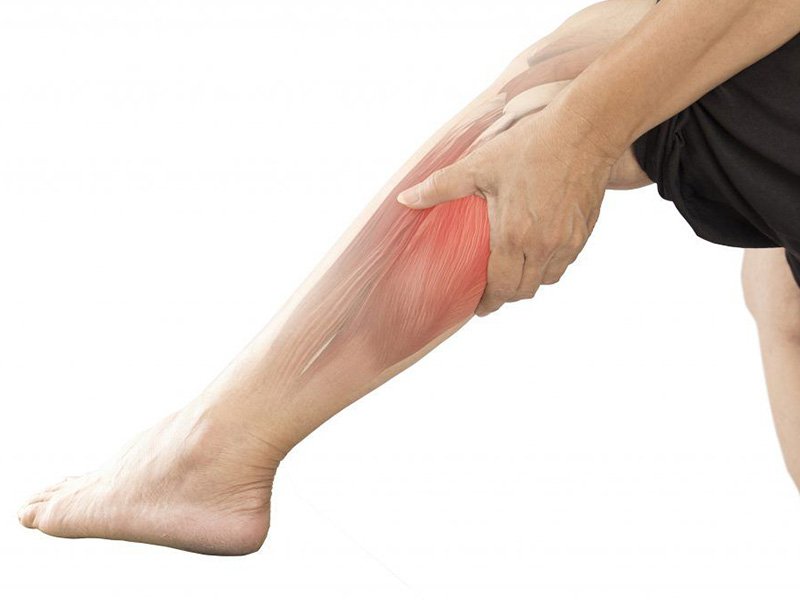
Proximal hamstring, gluteal and greater trochanteric pain syndromes appear in the consensus. We did not identify a dedicated meta-analysis for these sites, so support rests largely on expert consensus. Clinical assessment should separate tendinopathy from acute muscle strain, which is a different problem.
Selected Bone-Related Conditions
The consensus recommends shockwave for bone stress injuries, delayed union and non-union fractures, sesamoiditis and medial tibial stress syndrome. For bone it favors high-energy focused treatment over a minimum of 3 to 4 sessions, advises against single high-energy sessions under sedation or general anesthesia.

3. How Sports Medicine Clinics Integrate Shockwave Therapy into Rehabilitation
In practice, shockwave is one step in a clinical pathway, and the device is only as useful as the assessment and rehabilitation around it.
- Clinical assessment: symptom duration, training load, previous treatment, and imaging or other tests as needed.
- Treatment planning: decide whether the patient is a suitable candidate, and define the target tissue, parameters, and risk factors.
- Shockwave plus rehabilitation: treatment by trained staff, combined with progressive loading, strengthening or other appropriate rehabilitation.
- Outcome monitoring: record pain, function, load tolerance and return-to-sport progress, and adjust the plan.
Patient Assessment and Injury Diagnosis
The first task is an accurate diagnosis of the painful structure: midportion versus insertional Achilles pain, plantar fasciopathy versus other causes of heel pain, tendinopathy versus acute strain. Imaging is used where the clinical picture is unclear or a significant tear is suspected, since the consensus gave no recommendation for high-grade tears.
Identifying Appropriate Treatment Candidates
Candidates are typically athletes with persistent tendon or fascia symptoms who have not recovered with initial conservative care. The lateral epicondylitis data suggest symptom duration matters, with larger pain benefit when symptoms exceeded 6 months. Screening must exclude contraindications, such as active malignancy near the treatment area.
Combining Shockwave Therapy with Exercise-Based Rehabilitation
The consensus agreed that tendon and joint pathology can be co-treated with physical therapy exercise, and for bone conditions it endorsed combination with orthobiologics such as PRP. A sound message to patients is that shockwave supports the rehabilitation program and does not replace it.
Monitoring Pain, Function, and Return-to-Sport Progress
Use the same validated measures at baseline and follow-up, for example a pain scale plus a condition-specific score such as VISA-A for the Achilles or VISA-P for the patellar tendon, and record load tolerance and sport-specific tests. Documented outcomes protect the clinic and give a basis for stopping treatment that is not helping.
4. What Does a Focused Shockwave Treatment Session Involve?
The figures below come from the 2025 consensus and describe typical practice. Each clinic should set the actual protocol from the condition, the device’s instructions for use and clinical judgment, not from a single universal recipe.
Locating the Target Treatment Area
The consensus recommends clinical focusing, meaning the clinician treats the area of maximal pain reported by the patient. Gel and a suitable applicator or standoff are used to couple the device and set the depth.
Selecting Energy Levels and Treatment Parameters
The consensus defines three energy categories: low (below 0.10 mJ/mm²), medium (0.10 to 0.28 mJ/mm²) and high (0.29 mJ/mm² or more). It suggests low to medium energy for tendon and fascia conditions and high energy for bone, starting at a tolerable level and increasing toward the therapeutic target. Pain should not exceed 6 on a visual analog scale for tendon conditions or 7 for bone, and local anesthetic is not recommended.
These categories help when reading a device specification. Our BA-SW37 states a maximum EFD of 0.16 mJ/mm² for its linear handpiece (medium by this scale) and 0.4 mJ/mm² for its point handpiece (high). A stated maximum is a capability, not a recommended setting.
Number of Sessions and Treatment Intervals
For tendon conditions the consensus describes 3 to 5 sessions at 1 to 2 week intervals. For bone it describes at least 3 to 4 sessions of focused high-energy treatment. This is a consensus description, and clinics should not present it as a mandatory standard for every patient or device.
Patient Comfort, Safety, and Post-Treatment Considerations
- Common effects: pain at the applicator site, skin redness and bruising reached consensus as expected effects, with minimal risk of tendon rupture. Rare serious events were reported only in free-text responses.
- Activity: the consensus reported that range-of-motion and weight-bearing restrictions are not needed for tendinopathies and fasciopathies, including for in-season athletes, but it reached no consensus on activity restrictions after focused treatment of tendon or bone, so the clinician should decide.
- Contraindications: active malignancy near the treatment area is an absolute contraindication, and focused treatment should not be applied with lung in the field. Agreement was varied for active infection, pregnancy, a major nerve in the field, pacemakers or implantable electrical devices, and an epiphyseal plate in the field. Follow the device’s instructions for use.

5. Focused Shockwave Therapy vs. Radial Pressure Wave Therapy in Sports Clinics
Focused and radial devices are different tools, and sports clinics often use both. Neither is better for every condition, and the evidence does not support a blanket preference.
Differences in Energy Delivery and Focal Characteristics
Focused devices converge energy at a chosen depth and can be described by their focal zone and EFD. Radial devices spread a lower-pressure wave outward from the applicator tip, with the highest pressure near the surface. Their output is described by pressure and pulse characteristics, and the two sets of figures are not interchangeable. For a fuller comparison, see our article on focused vs. radial shockwave therapy.
Which Conditions May Benefit from Each Approach?
- Bone conditions: the consensus recommends focused treatment, and 64.9% of experts would not recommend radial pressure waves for bone pathology.
- Tendon and fascia conditions: the consensus suggests a combined radial and focused approach where both are available.
- Lateral epicondylitis: in one meta-analysis the pooled radial effect on pain (−1.13) was larger than the focused effect (−0.67, not statistically significant), though neither reached the authors’ threshold for clinical importance and few radial trials were included.
The last point shows why a claim that focused is always better would not survive scrutiny.
Can Clinics Combine Focused and Radial Technologies?
Yes, and the consensus suggests it for tendon conditions. A clinic might treat a broad superficial area with a radial applicator and a deeper insertion with a focused one. Our BA-SW36 is a pneumatic radial system with seven treatment heads of 6 to 40 mm in radial, focus and flat configurations, a 1 to 21 Hz frequency range and a stated applicator life of 2 million shots, positioned for orthopedic, physiotherapy and sports medicine use. Clinics should record which technology was used for each patient, as the consensus advises.
6. How to Choose a Focused Shockwave Machine for a Sports Medicine Clinic
Choose on measured output, applicator fit for your caseload, verifiable consistency and the quality of training and support. Specification sheets state capabilities, and only measurement reports and documentation show what a device actually delivers.
Energy Flux Density and Focal Depth
Check that the device covers the energy categories and depths your caseload needs: low to medium energy for most tendon and fascia work, and high energy and deeper reach if you also treat bone. Ask for measured EFD at each energy setting and the measured focal depth, with the test conditions.
- BA-SW37: stated maximum EFD of 0.16 mJ/mm² (linear handpiece) and 0.4 mJ/mm² (point handpiece).
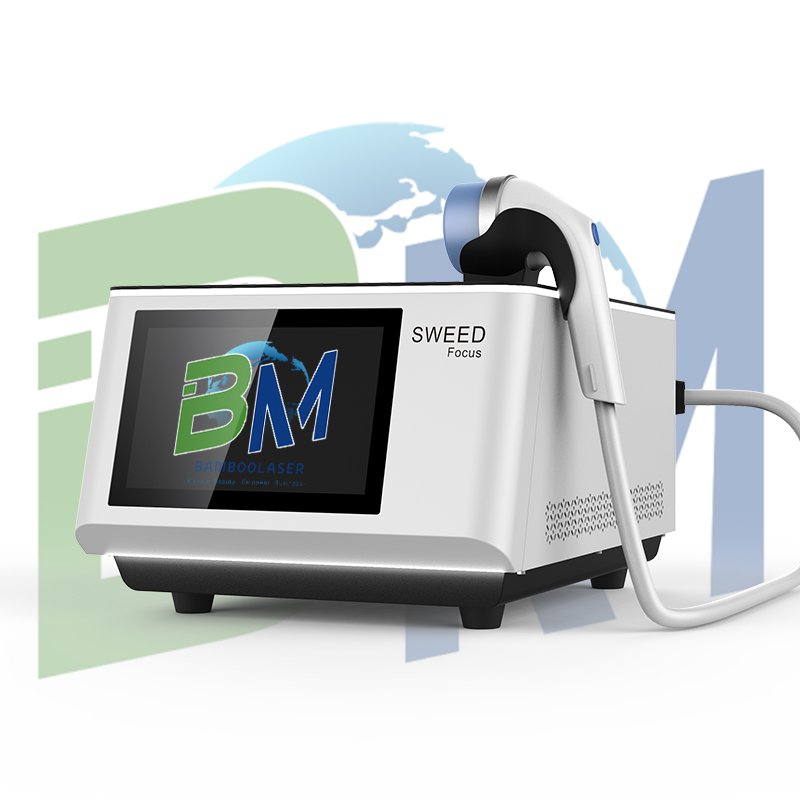
- BA-SW30: stated focal depth of 1.0 to 6.6 cm for its main handpiece, with an electromagnetic source.
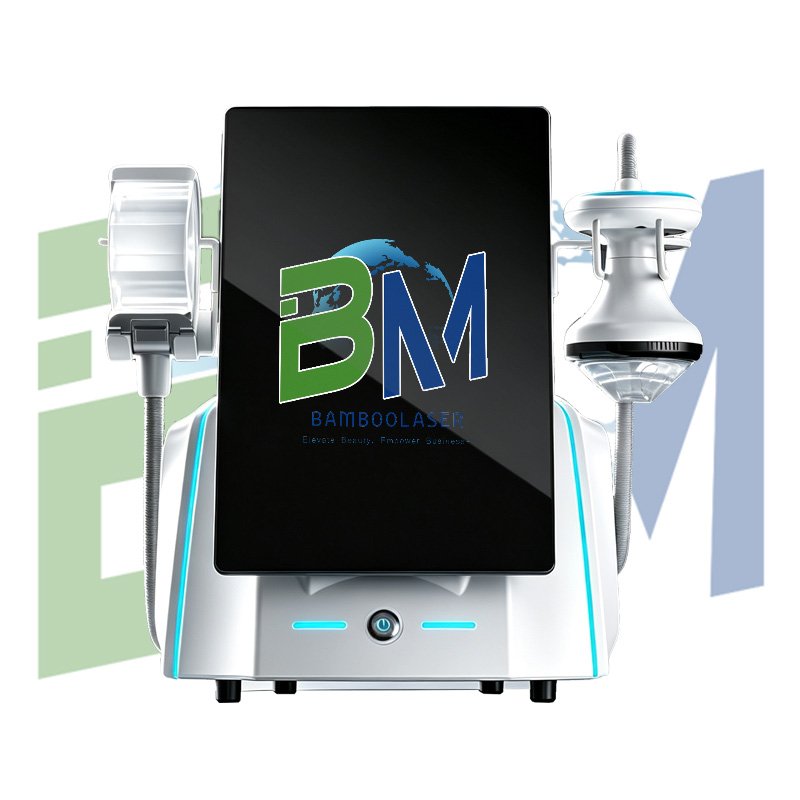
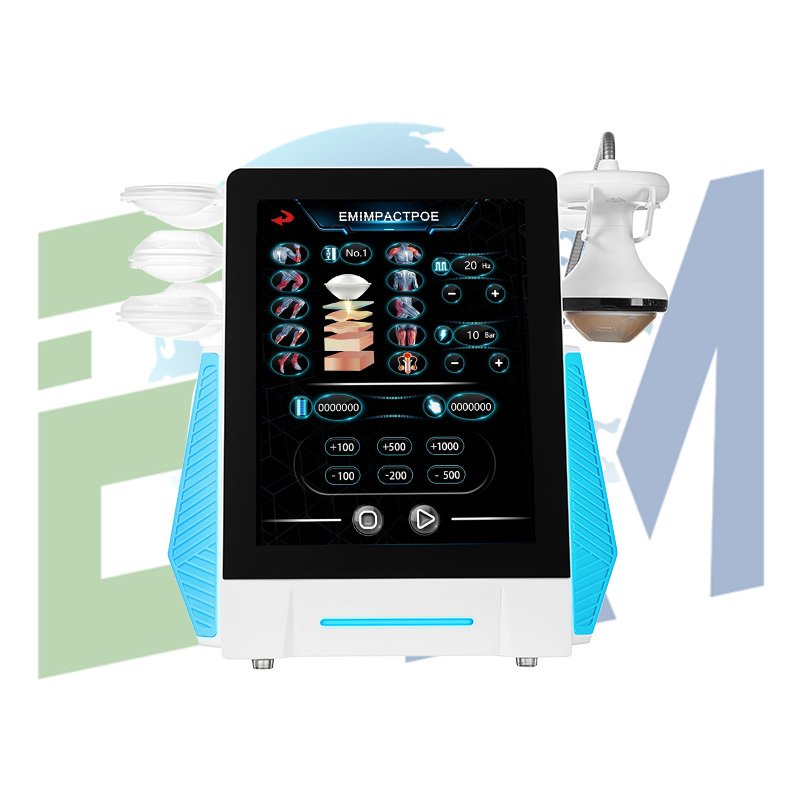
- BA-SW25: stated penetration of 4 to 66 mm, set by seven interchangeable silicone pad probes. Its 1 to 10 bar strength grade is a device setting, not an EFD, and should not be compared with EFD figures from other devices.
Applicator Design and Treatment Flexibility
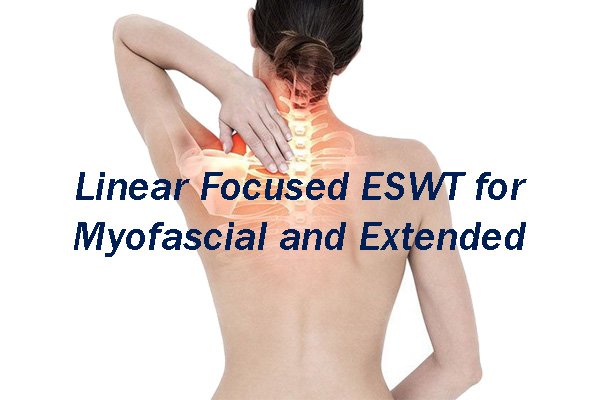
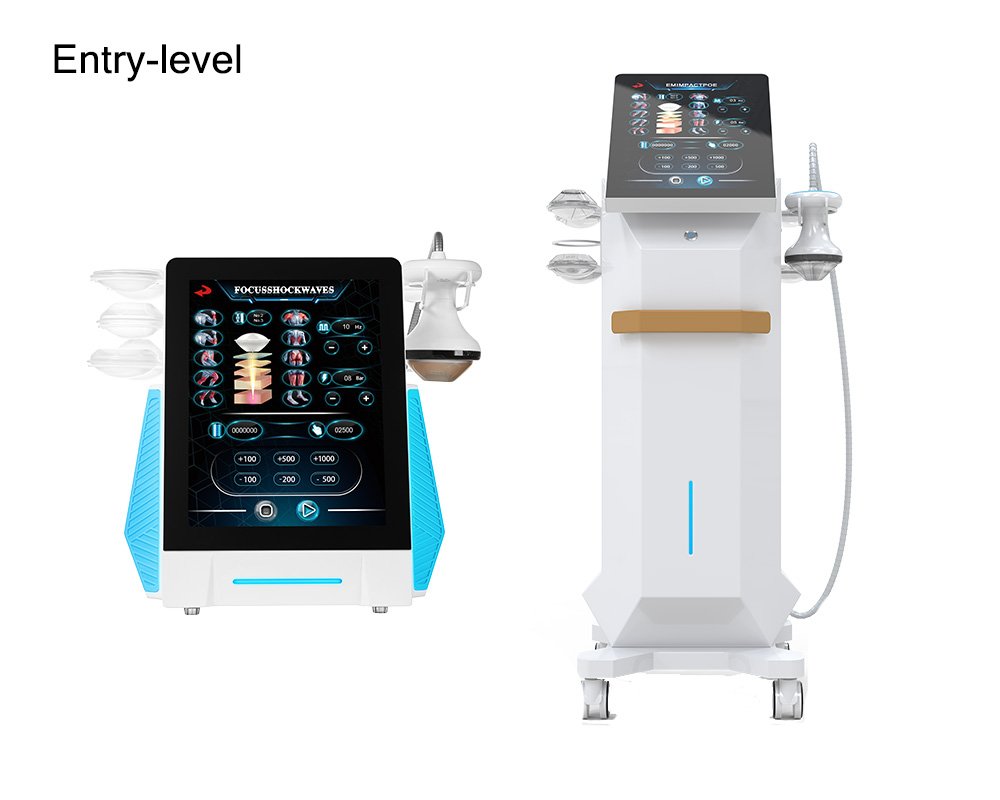
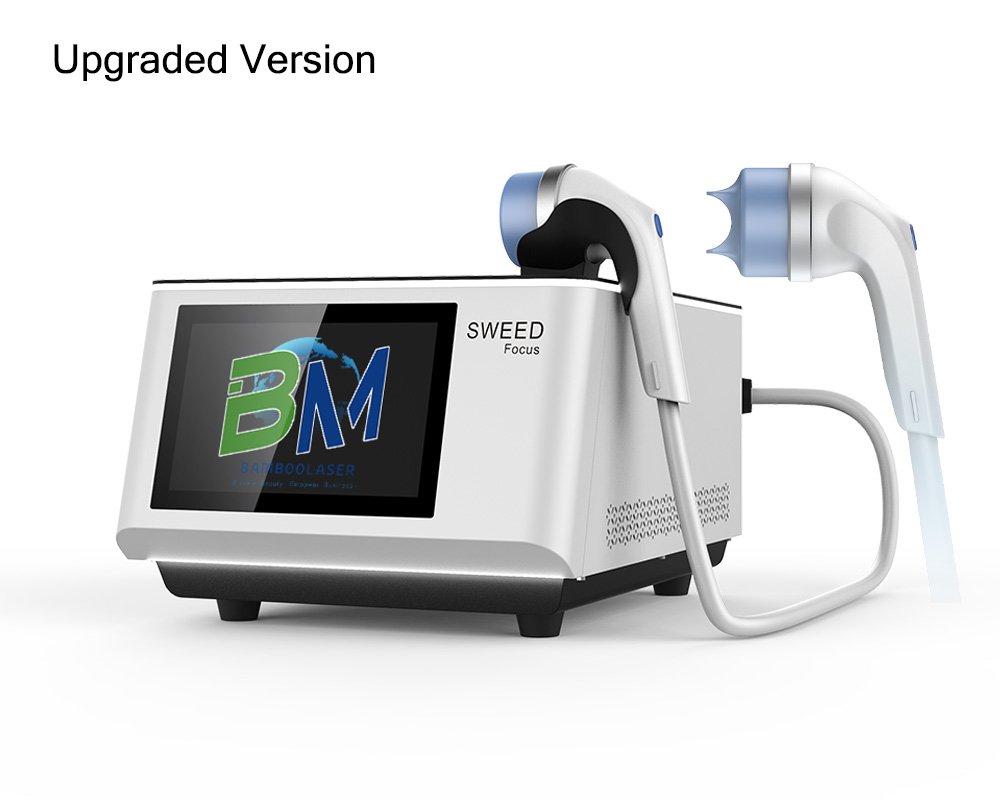
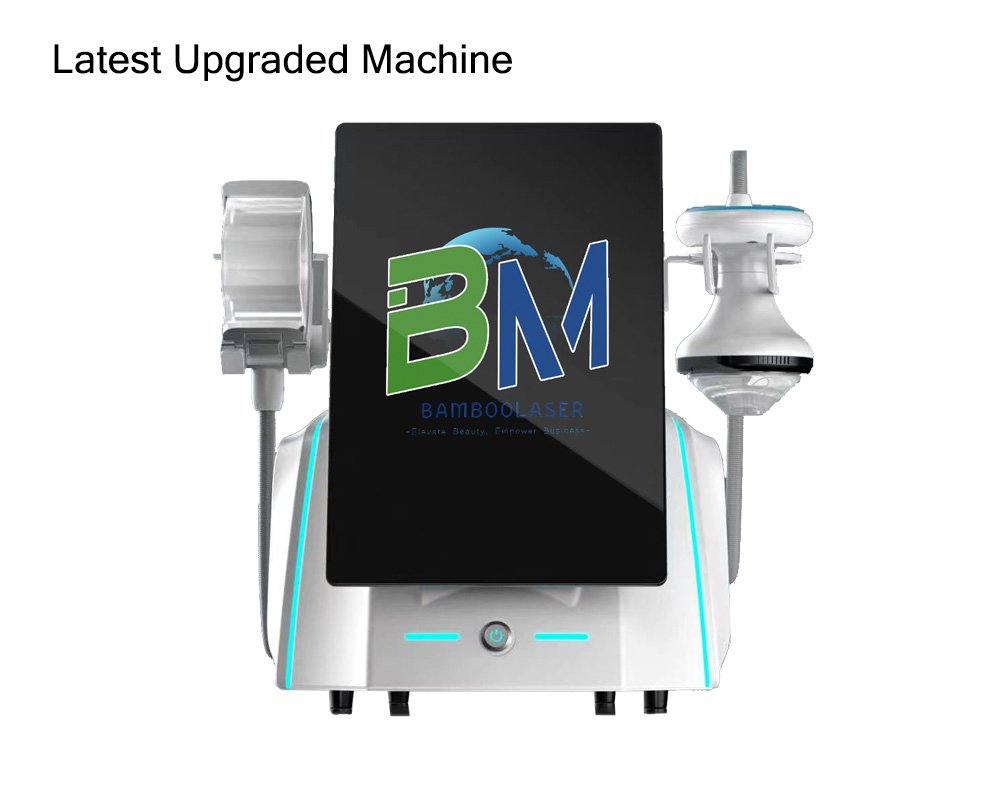
Match the applicators to the structures you treat. The BA-SW37 combines a linear handpiece for extended structures such as the Achilles tendon, plantar fascia and myofascial bands with a point handpiece and seven gel-pad probes for localized lesions. The BA-SW25 uses a handle with a 1.8-inch control screen and a 15-inch main touchscreen. The BA-SW30 offers continuous and single-shot trigger modes and a stated applicator life of over 500,000 shots.
7. Frequently Asked Questions
What Conditions Can Focused Shockwave Therapy Help Manage?
The 2025 consensus supports shockwave or pressure wave therapy as part of management for plantar fasciopathy, Achilles, patellar, common extensor, hamstring, gluteal and rotator cuff tendinopathies, and selected bone conditions such as bone stress injuries and delayed or non-union fractures. The strength of evidence differs by condition (Section 2).
Is Focused Shockwave Therapy Effective for Tendinopathy?
Results are mixed. A 2024 meta-analysis favored shockwave over corticosteroid injection for plantar fasciitis.
How Many Shockwave Sessions Are Usually Needed?
The consensus describes 3 to 5 sessions at 1 to 2 week intervals for tendon conditions, and at least 3 to 4 focused high-energy sessions for bone. The actual number depends on the condition, patient tolerance, device instructions and clinical judgment.
Is Focused Shockwave Better Than Radial Shockwave?
Not in every case. The consensus recommends focused treatment for bone and suggests combining radial and focused approaches for tendon, and a lateral epicondylitis meta-analysis found a larger pooled pain effect for radial than focused devices. The right choice depends on the condition and the evidence for it.
Can Athletes Continue Training During Treatment?
The consensus reported no need for range-of-motion or weight-bearing restrictions in tendinopathies and fasciopathies, including for in-season athletes, but it reached no consensus on activity restrictions after focused treatment of tendon or bone.
What Should Clinics Look for in a Focused Shockwave Machine?
Measured EFD and focal depth, applicators that fit your caseload, a model-specific measurement report, verified certificates and intended-use statements, rated applicator life, and clear training and support terms.
8. Explore Focused Shockwave Technology for Sports Medicine
We manufacture focused and radial shockwave platforms for sports medicine, orthopedic and physiotherapy clinics. Figures are the manufacturer’s stated specifications.
| Model | Wave source | Focus type | Key stated specifications | Typical clinic use |
|---|---|---|---|---|
| BA-SW37 | Piezoelectric | Linear and point handpieces | Max EFD 0.16 mJ/mm² (linear), 0.4 mJ/mm² (point); 7 gel-pad probes on the point handpiece | Achilles, plantar fascia, myofascial bands, localized tendon lesions |
| BA-SW30 | Electromagnetic | Point | Focal depth 1.0 to 6.6 cm; 60 to 120 pulses/min; over 500,000 shots | Deep pain, tendon and bone injuries |
| BA-SW25 | Piezoelectric | Point | Penetration 4 to 66 mm; 1 to 20 Hz; 1 to 10 bar strength grade; 7 pad probes | Tendinopathies, plantar fasciitis, shoulder and elbow conditions |
| BA-SW36 | Pneumatic | Radial, with focus and flat heads | 1 to 21 Hz; 2 million shots; 7 heads, 6 to 40 mm | Orthopedics, physiotherapy, sports medicine |
To request technical specifications, measurement data, certificates or a quotation, use the brochure and quote request on each product page or contact our engineering team. We provide on-site or online training, and customization of branding, specifications and features is available, with minimum order quantity depending on scope.
This article is for professional information and is not medical advice. Treatment decisions should be made by a qualified clinician.
References
- Rhim et al. Recommendations for use of extracorporeal shockwave therapy in sports medicine: an international modified Delphi study. Br J Sports Med. 2025;59(18):1287. doi:10.1136/bjsports-2024-109082. BJSM
- Cortés-Pérez I, et al. Efficacy of extracorporeal shockwave therapy, compared to corticosteroid injections, on pain, plantar fascia thickness and foot function in patients with plantar fasciitis: a systematic review and meta-analysis. Clin Rehabil. 2024;38(8):1023-1043. doi:10.1177/02692155241253779. Link
- Yoon SY, et al. Does the type of extracorporeal shock therapy influence treatment effectiveness in lateral epicondylitis? A systematic review and meta-analysis. Clin Orthop Relat Res. 2020;478(10):2324-2339. PMC
- Punnoose A, Norrish A, Pak K. Extracorporeal shock wave therapy for Achilles and patellar tendinopathy: meta-analysis and a systematic review of the literature. J Physiother Phys Rehabil. 2017;2(1):1000124. Link
- Stania M, et al. Treatment of jumper’s knee with extracorporeal shockwave therapy: a systematic review and meta-analysis. J Hum Kinet. 2022;84:124-134. doi:10.2478/hukin-2022-0089. Link