What should you consider when purchasing a picosecond laser beauty device?
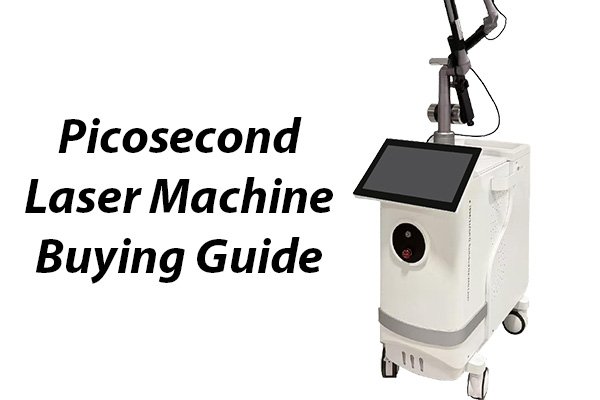
For clinics, dermatology firms, beauty centers, and distributors, a truly worthwhile investment in a picosecond laser machine requires consideration of several factors:
Laser Parameters + Clinical Performance + Safety + Training + After-Sales Support + ROI
Before purchasing a picosecond laser device, you can follow these steps to check for a suitable device that fits your financial plan.
Wavelength
Common picosecond laser wavelengths include 532nm, 755nm, and 1064nm. Different wavelengths are related to different pigments, skin depths, and clinical applications.
When purchasing a machine, ask, “Which wavelengths do I actually need for my target treatments?” Focus on the functions and indications of different wavelengths based on your primary clients’ needs.
Multi-wavelength devices can cover a full range of treatments from the epidermis to the dermis, from pigmentation to tattoos. Choose a single-wavelength or multi-wavelength machine based on your budget and client needs.
Pulse Duration
Pulse width/pulse duration is a fundamental parameter determining the core mechanism of treatment and clinical efficacy.
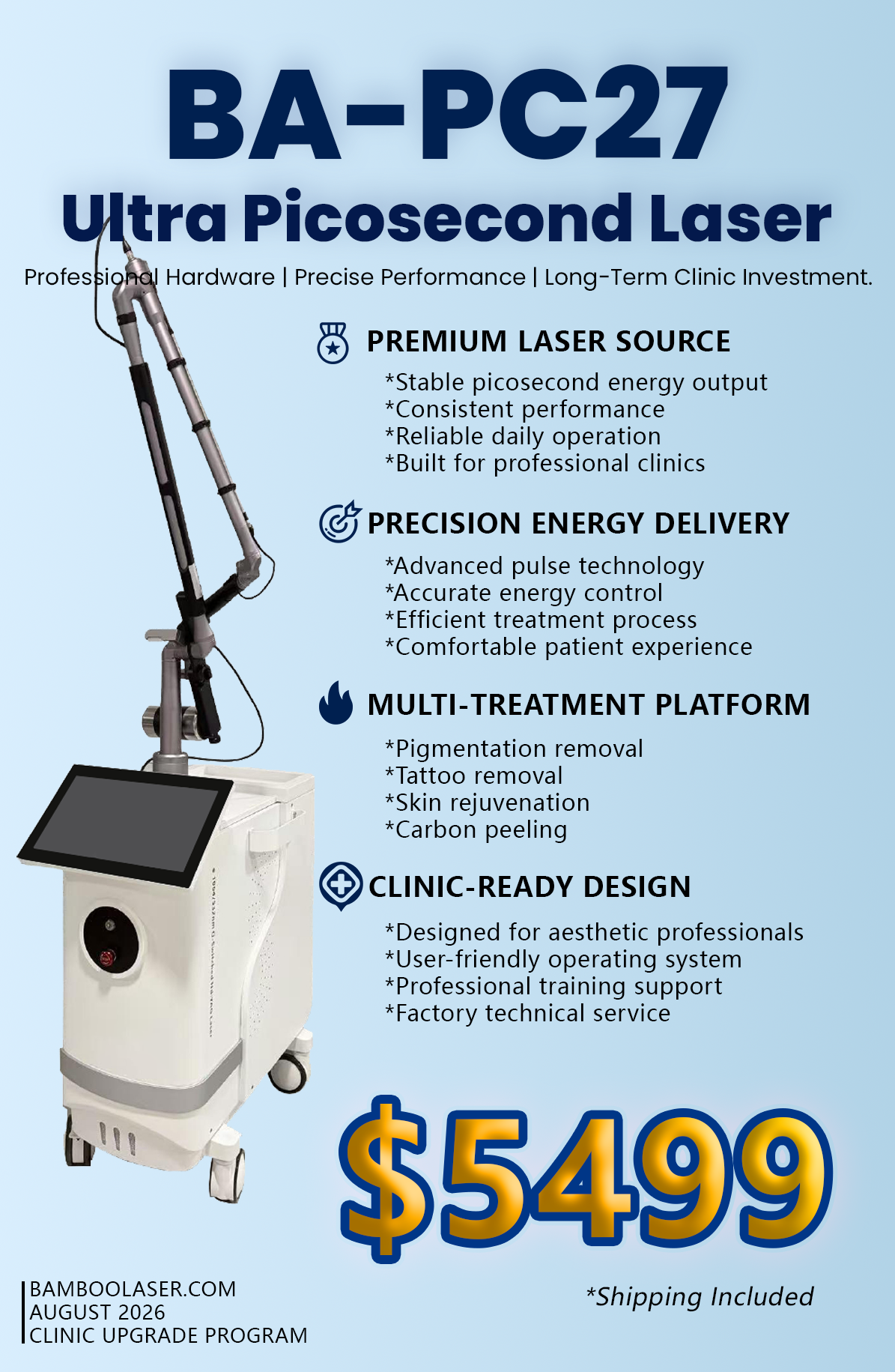
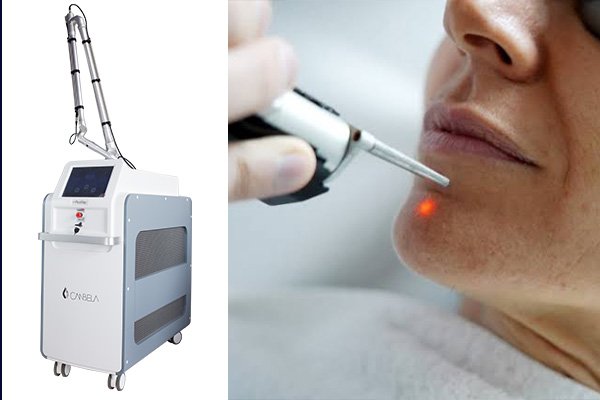
Determining the pulse width data of the purchased machine confirms whether it is a genuine picosecond laser machine. Typical picosecond laser machines have pulse widths of 150-750 ps, primarily utilizing photoacoustic/photomechanical effects. Energy is released within a trillionth of a second, generating a powerful optical shock wave that can potentially shatter pigment particles to <1μm in size with minimal thermal damage.
Spot Size
Spot size directly affects energy density, treatment area, treatment speed, and treatment accuracy.
Understanding the range of spot sizes and the corresponding handpieces for different spot sizes will help you determine if the machine meets your purchase needs.
Indications
Before purchasing a machine, you need to confirm, “What do I intend to treat with this machine?” Currently, picosecond lasers have a relatively mature research foundation in tattoos and some pigmented lesions, such as tattoo removal, pigmentation disorders, freckles, solar freckles, and acne scars.
The treatment results of the desired machine are highly dependent on the equipment parameters, the patient’s condition, and the operator. Based on your own capabilities, available training, and the primary needs of your target customers, purchase a machine with specific functions.
Applicable Skin Tone
Consider the range of skin tones this machine can cover.
Different skin tones carry different risks with pigmented laser treatments. Picosecond laser machines support a variety of skin problems for people in Fitzpatrick I-VI. Tailor your approach to your client group, determining skin tone, indications, parameter ranges, and supporting clinical data.
Safety
Picosecond lasers are high-energy laser devices, making a safety system essential. This system is crucial for protecting the machine, the operator, and the patient.
Consultation is needed to confirm whether the equipment includes emergency stop, key switch, foot switch, laser emission indicator, cooling protection, water flow protection, over-temperature protection, fault detection, and clearly defined standby/ready/emission states.
Number of handles
The number of handles determines the machine’s functionality and maintenance costs.
Training
The purpose of training is to determine whether the machine can truly perform at its best. Before purchasing the machine, the training content should be determined. Operators need to correctly set the parameters to achieve the expected results.
The machine purchaser should provide clinical training, such as patient assessment, skin type, indications, parameter selection, treatment procedures, and post-operative care. Safety training should also be provided, including laser safety, eye protection, emergency procedures, and contraindications.
After-sales service
After-sales service needs to be confirmed in detail. When purchasing machines overseas, confirm the warranty period, what is covered within the warranty period, who is responsible if a certain part of the machine has a problem, and how long it will take for technical issues to be addressed. Confirm the details and the responsible party.
Pricing Structure
Determine the scope of the manufacturer’s quote. Is it a single quote for the machine, or does it include the machine, shipping costs, customs duties, standard handles, additional handles, training, warranty, etc.
ROI
ROI is a crucial factor. It considers whether the equipment offers the highest cost-effectiveness within your financial plan. Based on market treatment prices, the number of treatments, consumable costs, personnel costs, marketing costs, and maintenance costs, determine the type of machine investment to purchase.
Controlling your ROI is key to achieving the best possible investment return.
Choose the Right Picosecond Laser, Not Simply the Most Powerful One
Choosing a picosecond laser machine is not simply a matter of comparing energy, pulse duration, wavelengths, or price. A reliable purchasing decision should consider the complete picture—regulatory compliance, actual laser performance, clinical applications, skin-type suitability, safety systems, training, after-sales support, and long-term return on investment.
The right device is not necessarily the one with the highest energy, the shortest advertised pulse, the most handpieces, or the lowest price. It is the one that matches your clinical needs, complies with the requirements of your target market, provides reliable and verifiable performance, and can be supported throughout its service life.
Before placing an order, ask your supplier for specific technical documentation, clinical evidence, treatment protocols, warranty terms, and a clear breakdown of the total cost of ownership. Taking the time to evaluate these factors can help you avoid costly surprises and make a more informed investment.
A good picosecond laser should not only perform well on paper—it should be safe, compliant, clinically practical, reliable in daily use, and commercially sustainable.