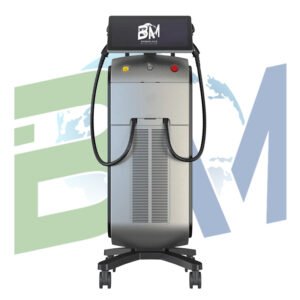
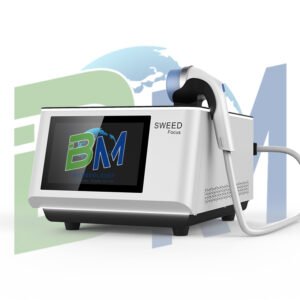
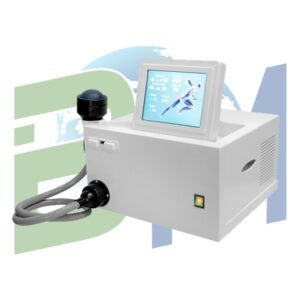
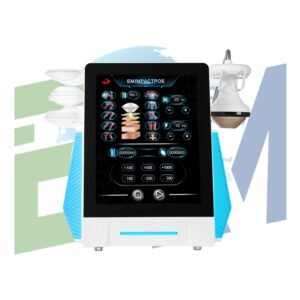
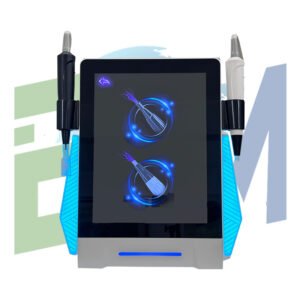
Focused shockwave therapy is not a single, uniform treatment format. While both linear-focused and point-focused applicators concentrate acoustic energy beneath the skin, they differ in the shape, length, and distribution of the focal zone.
The practical distinction is simple: point-focused shockwave therapy concentrates energy into a relatively small focal target, whereas linear-focused shockwave therapy creates an elongated treatment zone intended to cover a longer anatomical structure more efficiently. For clinics evaluating systems for musculoskeletal applications, men’s health, and erectile dysfunction (ED) protocols, the choice should be based on target anatomy—not just energy settings or marketing terminology.
Important: The actual focal-zone dimensions, usable treatment depth, energy-flux density, pulse characteristics, and clinical indications depend on the specific generator and applicator. “Focused” alone does not guarantee the same performance across devices.
What Is Focused Shockwave Therapy?
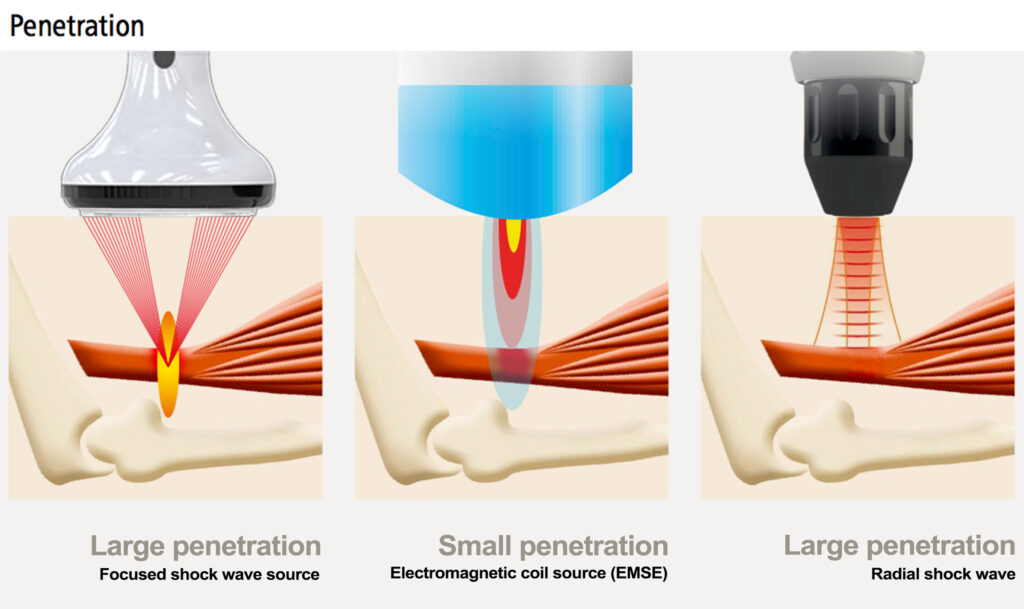
Focused shockwave therapy—often called focused extracorporeal shockwave therapy (fESWT)—uses mechanically generated acoustic shockwaves that converge at a defined focal zone below the skin surface. Unlike radial pressure-wave systems, where the greatest energy is typically near the applicator head, focused systems are designed to place the highest energy at a selected depth within tissue.
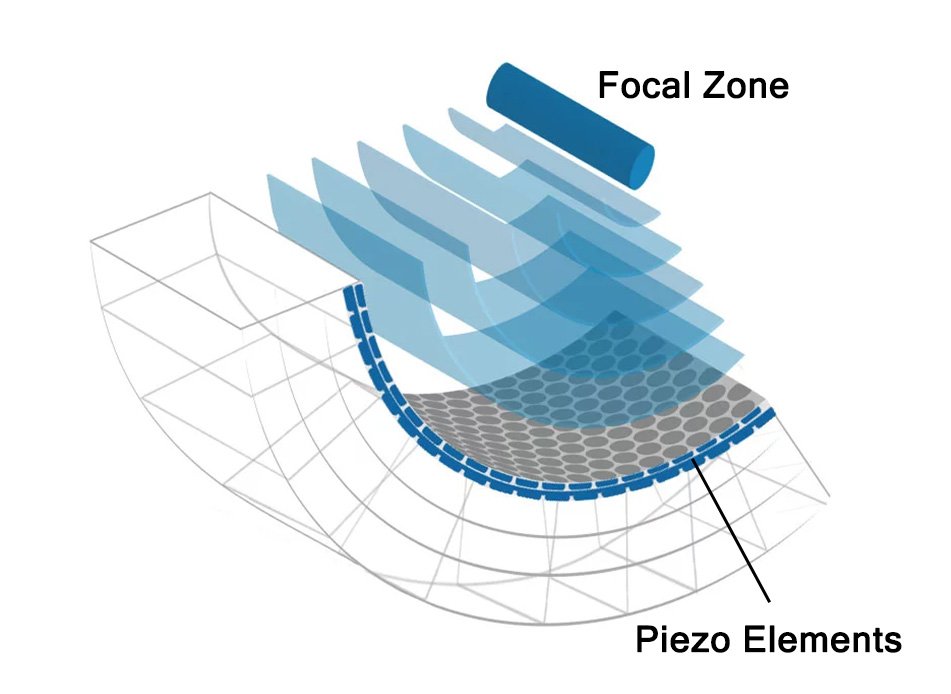
Focused shockwaves may be generated through electromagnetic, piezoelectric, or electrohydraulic technology. Depending on the handpiece design, the device directs acoustic energy toward a focal region, enabling clinicians to address selected tissue volumes at controlled depths.
The focal zone is commonly described using parameters such as axial length, lateral width, focal volume, and the -6\text{ dB} area—the region where pressure amplitude reaches at least 50% of the peak focal pressure. This is important because treatment is not delivered to a mathematically perfect “dot”; it is delivered into a three-dimensional volume whose shape varies by applicator design.
What Is Linear-Focused Shockwave Therapy?
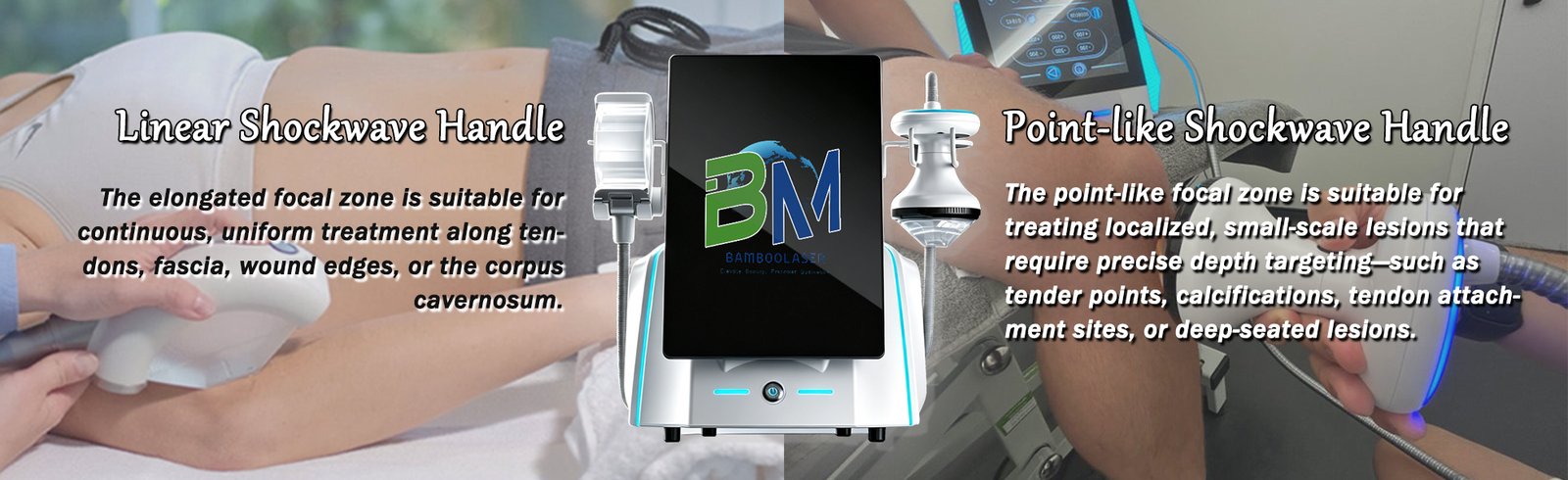
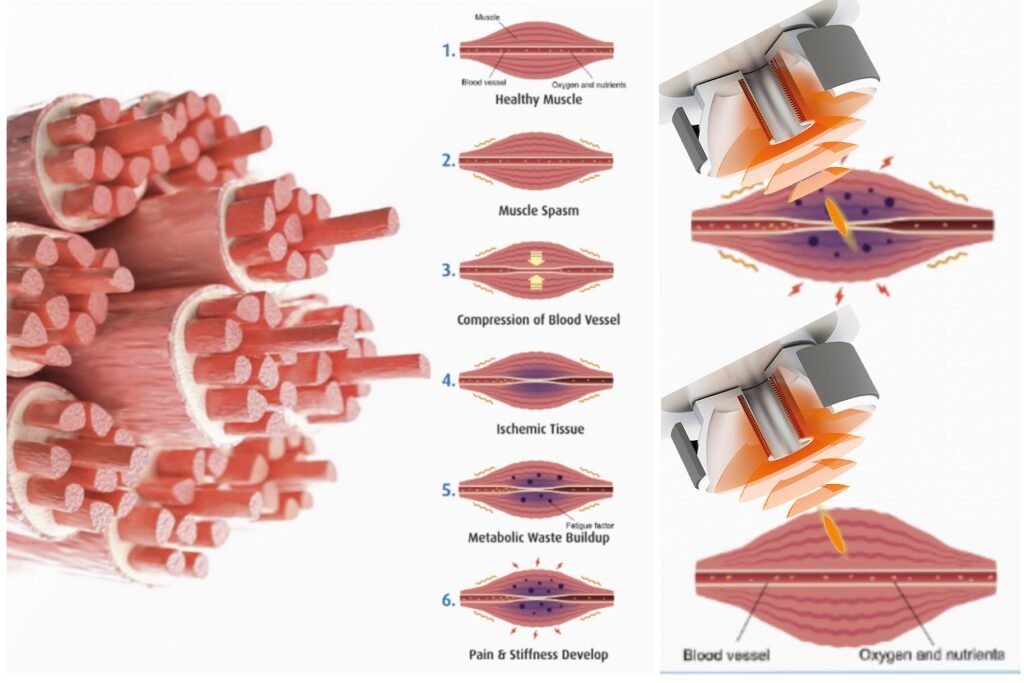
Linear-focused shockwave therapy is a focused-energy approach designed to create a longer, elongated focal zone instead of a compact, point-like focal area. It is sometimes described as focused linear compression, linear compression therapy, or linear compression for ED when discussing protocols intended to cover elongated vascular or erectile tissue.
Rather than requiring multiple tightly spaced point applications to cover a long structure, a linear-focused applicator may be designed to distribute therapeutic energy along an extended line or volume. In men’s-health applications, this concept is often associated with treating the length of the corpora cavernosa and related penile structures more consistently during an ED session.
How the Linear Focal Zone Works
A linear-focused applicator uses a focal geometry that extends energy along a longer treatment region. Instead of concentrating most of the acoustic energy into one compact focal spot, the system creates an elongated focal zone.
In practical treatment planning, this can change how a clinician covers tissue:
- A point-focused applicator may require repeated placement at multiple individual positions.
- A linear-focused applicator may cover a longer section of tissue per placement or controlled movement.
- The goal is to create more continuous coverage over elongated anatomy while maintaining focused-energy delivery.
For linear compression therapy, the key consideration is not simply that the treatment field is “larger.” The important factor is whether the applicator’s focal geometry matches the length, depth, and contour of the intended anatomy.
When an Extended Focal Zone May Be Useful
An elongated focal zone may be useful when the treatment target is long, tubular, curved, or spread across an extended anatomical path.
Examples may include:
- The corpora cavernosa in ED-focused treatment protocols.
- Larger tendon regions where a clinician wants to cover a longer segment.
- Broad soft-tissue treatment plans that require consistent energy distribution along a defined line.
- Multi-site protocols where reducing repeated repositioning may improve workflow consistency.
For ED, focused linear low-intensity shockwave treatment has been evaluated in clinical research, and one published randomized study reported improved erectile function outcomes after treatment. However, ED treatment protocols, energy levels, target sites, number of sessions, and patient-selection criteria should follow the evidence, local regulations, product labeling, and clinician judgment.



What Is Point-Focused Shockwave Therapy?
Point-focused shockwave therapy uses a compact, concentrated focal zone to direct acoustic energy toward a localized tissue target. It is commonly used when the clinician wants to focus treatment on a specific painful, injured, calcified, or deep anatomical area.
The term “point-focused” is useful for comparison, but it should not be interpreted literally. A focused applicator produces a three-dimensional focal volume, not an infinitely small point. Still, compared with a linear-focused applicator, the active focal zone is generally more localized and concentrated.
How Point-Focused Energy Is Targeted
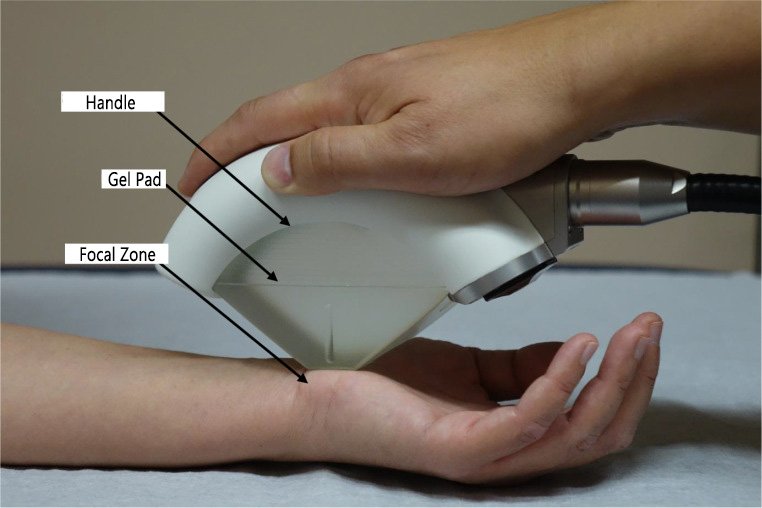
In a point-focused configuration, acoustic waves are generated and converged through a reflector, acoustic lens, or other focusing mechanism. The system is engineered so that the maximum energy is delivered at a specified focal depth rather than at the skin surface.
This allows the clinician to position the handpiece according to:
- The estimated or imaged depth of the target tissue.
- The size of the lesion or painful region.
- The surrounding anatomy.
- The required energy setting and pulse count.
- The patient’s tolerance and treatment goal.
Because focused shockwave systems can reach deeper structures, they are often considered when the target is located beneath thicker soft-tissue layers or when a more localized subsurface treatment field is desired.
When Precise Focal Targeting May Be Useful
Point-focused treatment may be particularly useful when a condition is concentrated in a small or well-defined anatomical area.
Common examples include:
- Localized tendon insertion pain.
- Calcific deposits in tendons.
- Plantar fascia insertion regions.
- Selected bony or subchondral targets.
- Trigger-point-like or focal musculoskeletal pain regions.
- Small, distinct areas requiring controlled and repeatable positioning.
Focused shockwave therapy has established clinical use across selected musculoskeletal and bone-related indications, although the strength of evidence varies substantially by condition, protocol, and device. ISMST guidance includes focused shockwave applications for selected bone pathologies and lists erectile dysfunction among its indications.
Linear-Focused vs Point-Focused Shockwave Therapy
| Feature | Linear-Focused Shockwave | Point-Focused Shockwave |
|---|---|---|
| Focal-zone shape | Elongated or line-like focal volume | Compact, localized focal volume |
| Main treatment strategy | Covers a longer anatomical path | Concentrates on a defined target area |
| Typical workflow | May reduce the number of repositioning points across elongated tissue | Often uses multiple placements to cover a broad or long target |
| Best anatomical fit | Long, tubular, extended, or longitudinal structures | Small, focal, localized, or highly specific structures |
| Example application context | Linear compression for ED protocols involving corpus cavernosum coverage | Localized tendon, calcification, insertional pain, or deep focal tissue targets |
| Precision characteristic | Precision along an extended focal pathway | Precision at a smaller focal target |
| Coverage characteristic | Broader longitudinal coverage per placement | Narrower coverage per placement |
| Key device question | How long, wide, and deep is the linear focal zone? | How large, deep, and concentrated is the point focal zone? |
| Clinical planning priority | Coverage uniformity across elongated anatomy | Accurate localization of the target lesion or tissue site |
Neither design is inherently “better” in all situations. The better option depends on whether the clinical target is primarily long and distributed or small and localized.
How Do Linear and Point-Focused Shockwaves Differ in Tissue Coverage?
The most important difference is the geometry of delivered energy.
Point-focused shockwave therapy is designed for a compact focal region. If the target area is broad, elongated, or distributed over multiple locations, the clinician may need to reposition the applicator repeatedly to create adequate coverage.
Linear-focused shockwave therapy aims to create an extended focal field. This may allow more tissue to be addressed along a longitudinal path with fewer individual treatment positions.
For example, consider two different treatment targets:
- A small calcific shoulder lesion may call for point-focused targeting because the clinician wants to concentrate treatment around a defined anatomical site.
- An ED protocol focused on the length of the corpora cavernosa may be better suited to a linear-focused approach because the relevant tissue is elongated rather than isolated to one small point.
This does not mean an extended focal zone automatically produces superior results. Clinical outcomes depend on diagnosis, patient selection, energy delivery, number of pulses, treatment interval, target localization, device specifications, and operator technique.
How Does Target Anatomy Affect Focal Zone Selection?
The focal-zone design should follow the anatomy—not the other way around.
A clinician should consider whether the target is:
- Localized or elongated.
- Superficial, mid-depth, or deep.
- Relatively flat, curved, narrow, broad, or irregular.
- Close to sensitive structures.
- Easily identified by palpation, ultrasound, imaging, or anatomical landmarks.
- Large enough to require multiple adjacent treatment fields.
Anatomical alignment matters because shockwave energy does not affect every tissue layer equally. Tissue composition, density, thickness, and the selected energy level can influence how acoustic energy propagates and where it is delivered. Research indicates that focused shockwaves can penetrate deep tissue and even reach bone-related targets, but the effective interaction depends on tissue type and wave intensity.
For this reason, clinics should avoid choosing a device solely based on a quoted “penetration depth.” The more useful question is: Can the system deliver the desired focal-zone shape and energy profile to the exact tissue volume being treated?
Clinical Applications of Linear-Focused Shockwave
Linear-focused shockwave therapy is most relevant when an extended focal zone offers a practical anatomical match.
Potential clinical-use contexts include:
- Low-intensity focused linear compression for ED protocols.
- Treatment concepts involving the corpus cavernosum and crura penis.
- Elongated soft-tissue structures requiring longitudinal energy coverage.
- Clinics seeking a more standardized, repeatable protocol for extended anatomical regions.
- Applications where reducing repeated spot-by-spot positioning may improve session workflow.
In ED treatment discussions, linear compression for ED generally refers to applying focused shockwave energy along the elongated erectile structures rather than treating only isolated points. A published overview of linear focused shockwave technology describes longitudinal application along the corpus cavernosum and perineal region to support broad and homogeneous target-tissue coverage.
However, clinics should present ED services carefully. Evidence for low-intensity focused shockwave therapy is still protocol-specific, and claims should not imply guaranteed restoration of erectile function. Patient assessment should account for vascular status, cardiovascular risk, hormonal factors, medication effects, psychological contributors, diabetes, prostate-treatment history, and the underlying cause of ED.
Clinical Applications of Point-Focused Shockwave
Point-focused shockwave therapy is commonly associated with localized musculoskeletal and orthopedic applications where the treatment target can be identified as a specific region.
Potential clinical-use contexts include:
- Chronic plantar fasciitis.
- Calcific tendinopathy of the shoulder.
- Lateral elbow tendinopathy.
- Patellar or Achilles tendon conditions.
- Localized myofascial or tendon-insertion pain.
- Delayed bone healing, nonunion, stress fracture, and other bone-related indications when a high-energy focused system and appropriate positioning are used.
The International Society for Medical Shockwave Treatment identifies chronic tendinopathies, selected bone pathologies, and certain skin conditions among recognized shockwave-treatment indications. It also specifies that bone treatment requires a high-energy focused shockwave device with positioning technology.
Evidence quality is not identical across all conditions. Stronger support exists for some established indications, while other uses remain more heterogeneous or protocol dependent. Clinics should ensure their treatment claims match their device’s regulatory clearance, intended use, and the scientific evidence for the relevant indication.
How to Choose Between Linear-Focused and Point-Focused Shockwave Therapy?
The correct choice should be based on clinical intent, anatomy, and the device’s verified technical specifications.
Target tissue
Start with the tissue you intend to address.
A localized calcification, tendon insertion, or small pain point may favor a point-focused applicator. An extended erectile structure or other longitudinal soft-tissue target may favor a linear-focused applicator.
Target depth
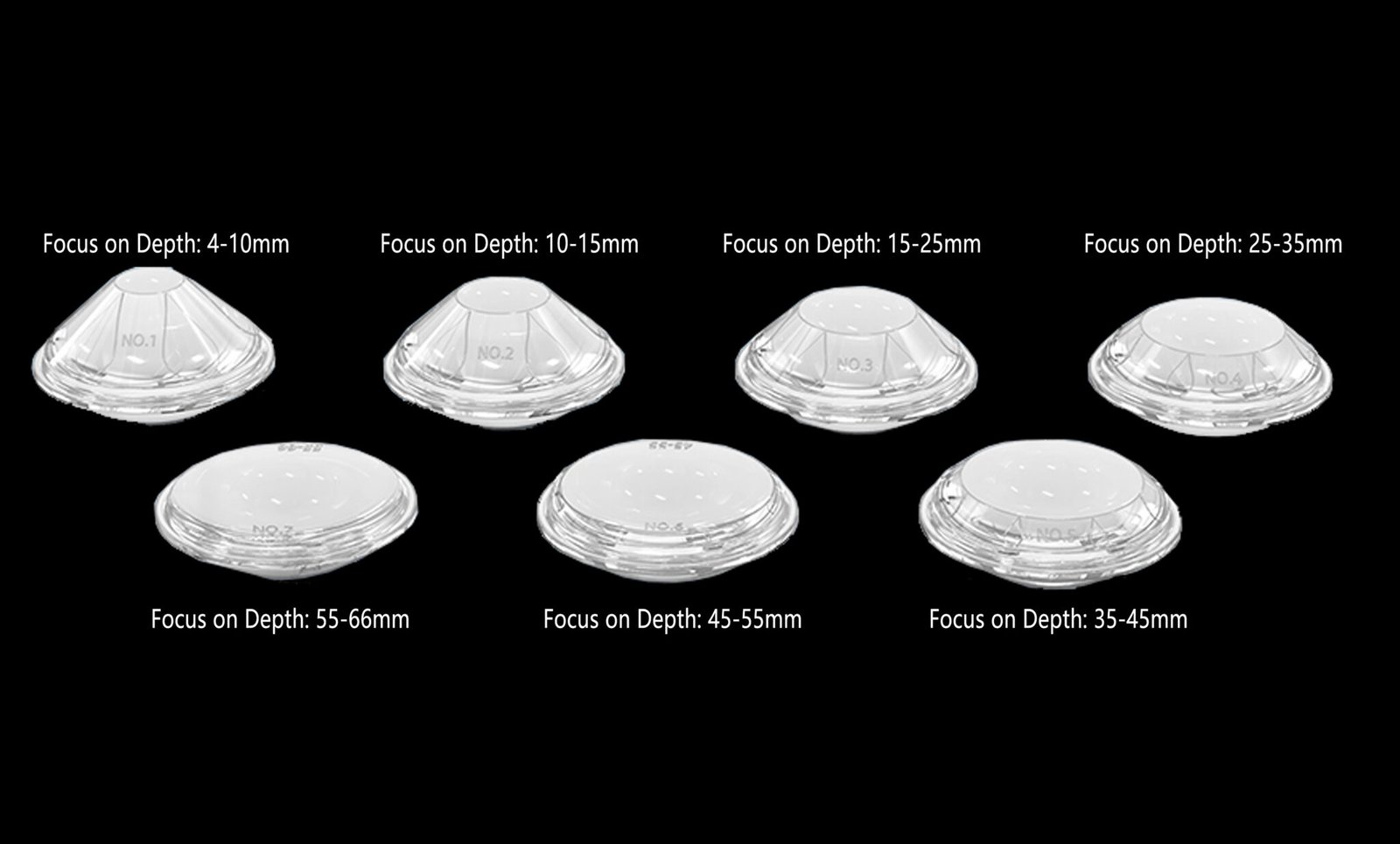
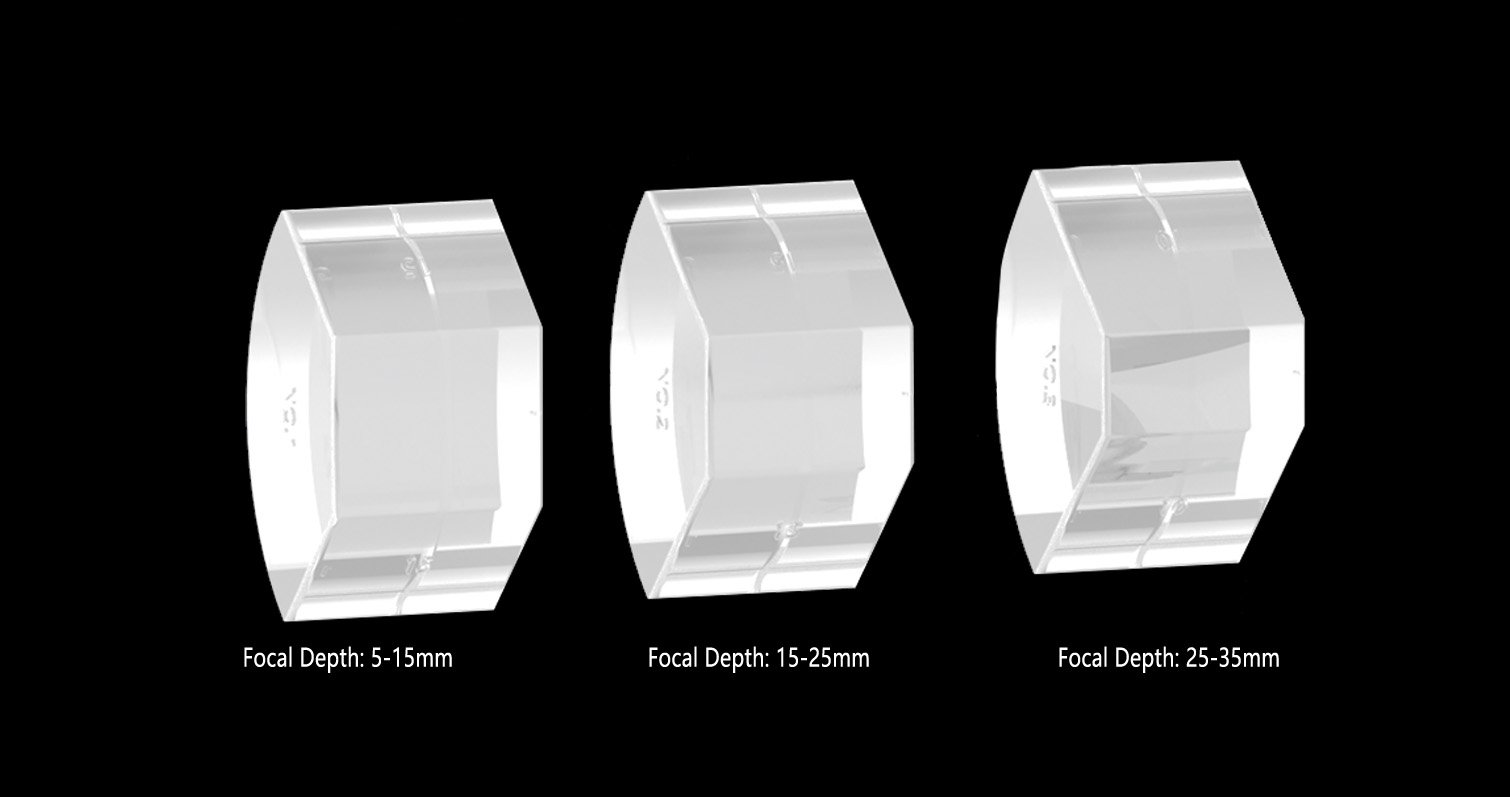
Review the actual focal-depth range provided by the manufacturer. Focused shockwave systems are designed to concentrate energy at selected depths, but depth range and usable energy vary between technologies and applicators.
Do not rely on general category labels alone. Ask for the applicator’s focal-depth chart, energy-flux-density range, and focal-zone dimensions.
Target size
Small targets generally benefit from more compact focal targeting. Larger or longer targets may require multiple point-focused placements or may be more efficiently addressed using an extended linear focal zone.
The target size should be compared with the device’s stated focal-zone width, length, and depth—not just the handpiece diameter.
Anatomical structure
Consider the shape and accessibility of the target.
A small, clearly identifiable structure may benefit from point-focused precision. A tubular, longitudinal, or anatomically extended target may benefit from focused linear compression. Curvature, surrounding tissue thickness, and nearby sensitive anatomy should also influence handpiece selection and positioning.
Required treatment coverage
Think about the total treatment field, not only the focal spot.
If the treatment goal is to cover a broad or elongated region consistently, a linear-focused design may simplify the protocol. If the goal is to deliver concentrated energy into one specific lesion or painful point, point-focused treatment may provide better spatial control.
Can One Shockwave System Use Both Applicators?
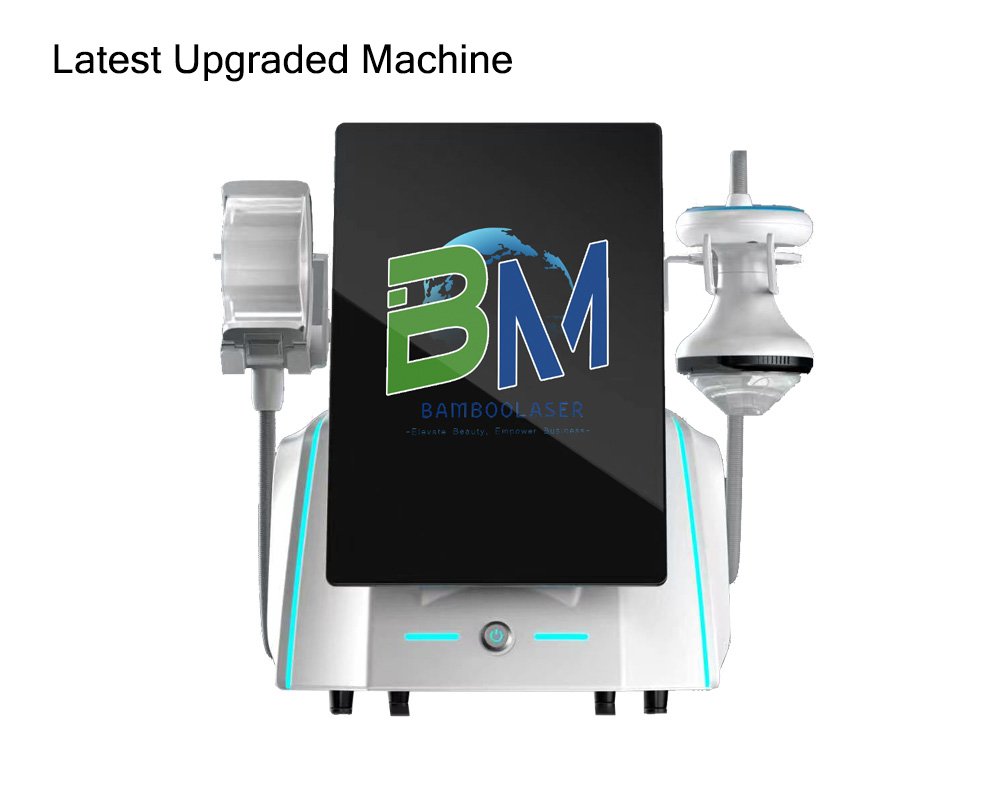
Yes. Some focused shockwave platforms may support multiple applicators or interchangeable treatment heads, including point-focused and linear-focused designs. Whether this is possible depends on the manufacturer’s system architecture, handpiece compatibility, software configuration, treatment presets, and regulatory status in the target market.
A dual-applicator platform may allow a clinic to use:
- A point-focused applicator for localized musculoskeletal, tendon, calcification, or bone-related targets.
- A linear-focused applicator for elongated soft-tissue treatment plans, including focused linear compression protocols for ED where appropriate.
Before purchasing, request written technical documentation for each applicator, including:
- Focal-zone length, width, and depth.
- Energy-flux-density range.
- Pulse frequency and pulse-count limits.
- Available coupling pads or depth-control accessories.
- Indications and contraindications.
- Regulatory documentation for your market.
- Operator-training requirements.
- Recommended treatment protocols and supporting clinical references.
Why a Dual-Applicator System May Be Useful for Clinics
A dual-applicator focused shockwave system can increase clinical flexibility without requiring separate devices for fundamentally different focal-zone needs.
For a multidisciplinary clinic, the value is not merely having more accessories. The value is being able to match applicator geometry to the anatomy and indication.
Potential advantages include:
- Broader treatment-service capability across men’s health and musculoskeletal care.
- More targeted protocol design for different tissue shapes and depths.
- Greater flexibility when treating both focal lesions and extended anatomical structures.
- More efficient workflow when a linear focal zone reduces repeated spot placements.
- Improved consultation opportunities by matching the treatment plan to the patient’s diagnosis rather than forcing every case into one handpiece design.
- Better equipment utilization when one platform supports several treatment pathways.
For aesthetic-device distributors and clinic operators, the strongest commercial message is not “one applicator replaces everything.” It is: the clinic has appropriate focal-zone options for different anatomical and treatment-planning needs.
Conclusion
The central difference between linear-focused shockwave vs point-focused shockwave is the shape of the therapeutic focal zone.
Point-focused shockwave therapy delivers concentrated acoustic energy to a localized focal volume and may be useful for specific, well-defined targets such as tendon insertions, calcific lesions, or selected deep musculoskeletal structures. Linear-focused shockwave therapy creates an extended focal zone and may be useful when the target anatomy is elongated, including focused linear compression protocols used in some ED treatment approaches.
When selecting between the two, clinics should evaluate target tissue, treatment depth, target size, anatomy, required coverage, device specifications, clinical evidence, and regulatory requirements. A system that supports both linear-focused and point-focused applicators may offer the flexibility to build more anatomy-driven treatment protocols rather than relying on a one-size-fits-all focal pattern.